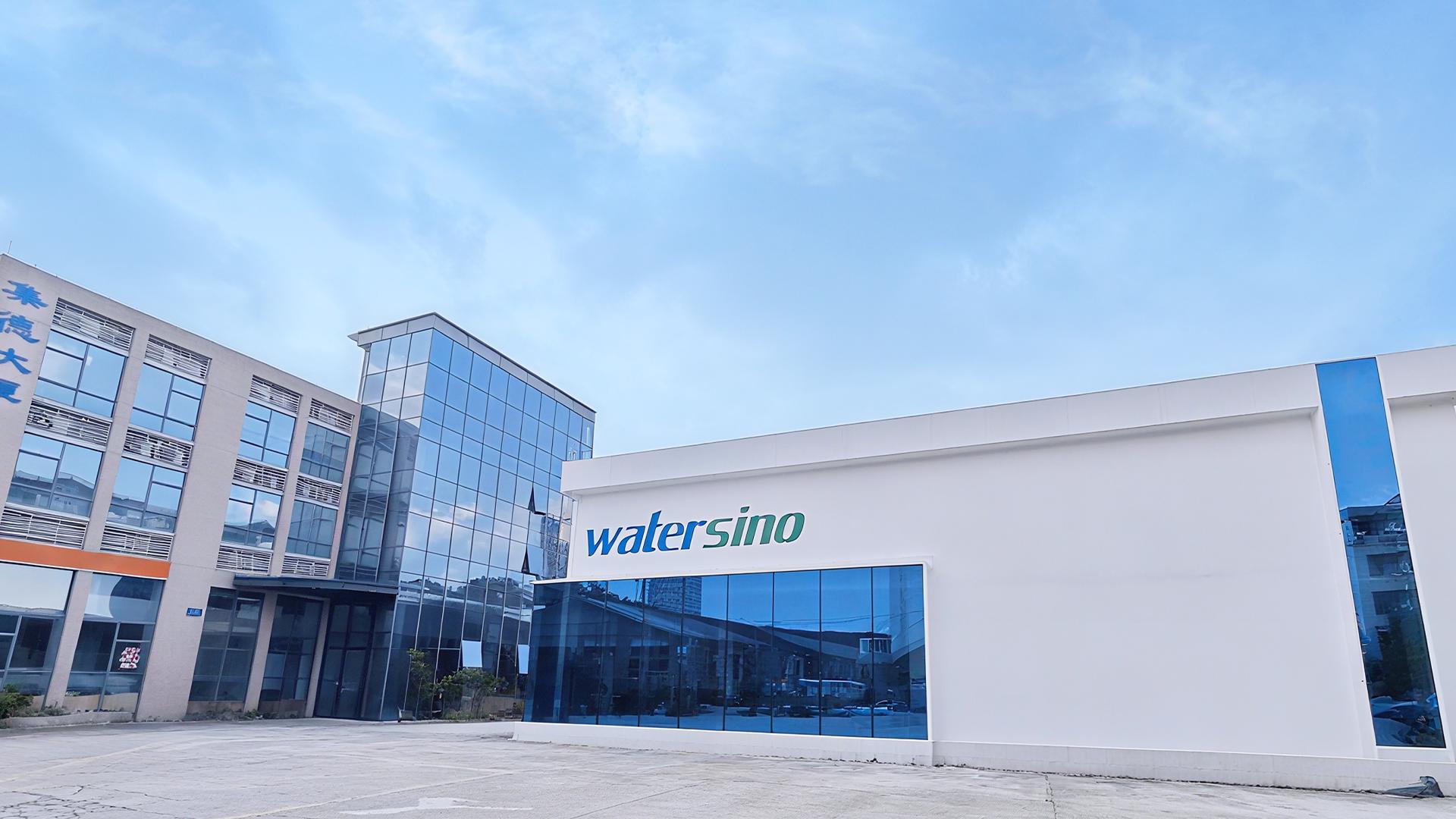
Watersino, a premium bathroom hardware manufacturer with 22 years of experience, has provided 48-hour acid salt spray comparison test data of DZR low-lead brass and zinc alloy. Substrate material was the only variable, and both materials were processed identically in the same way. The results provide direct and comparable evidence of corrosion resistance to hotel and trade clients across Oceania, Europe and the UK, so specifiers can match the proper application to each material using confirmed data rather than preconceptions.
Watersino tested both materials in the same sealed test chamber for a continuous 48-hour acidic salt-spray cycle. Both Tap materials were tested using one test process and one environment. Therefore, the performance discrepancies are only related to the base material attributes.
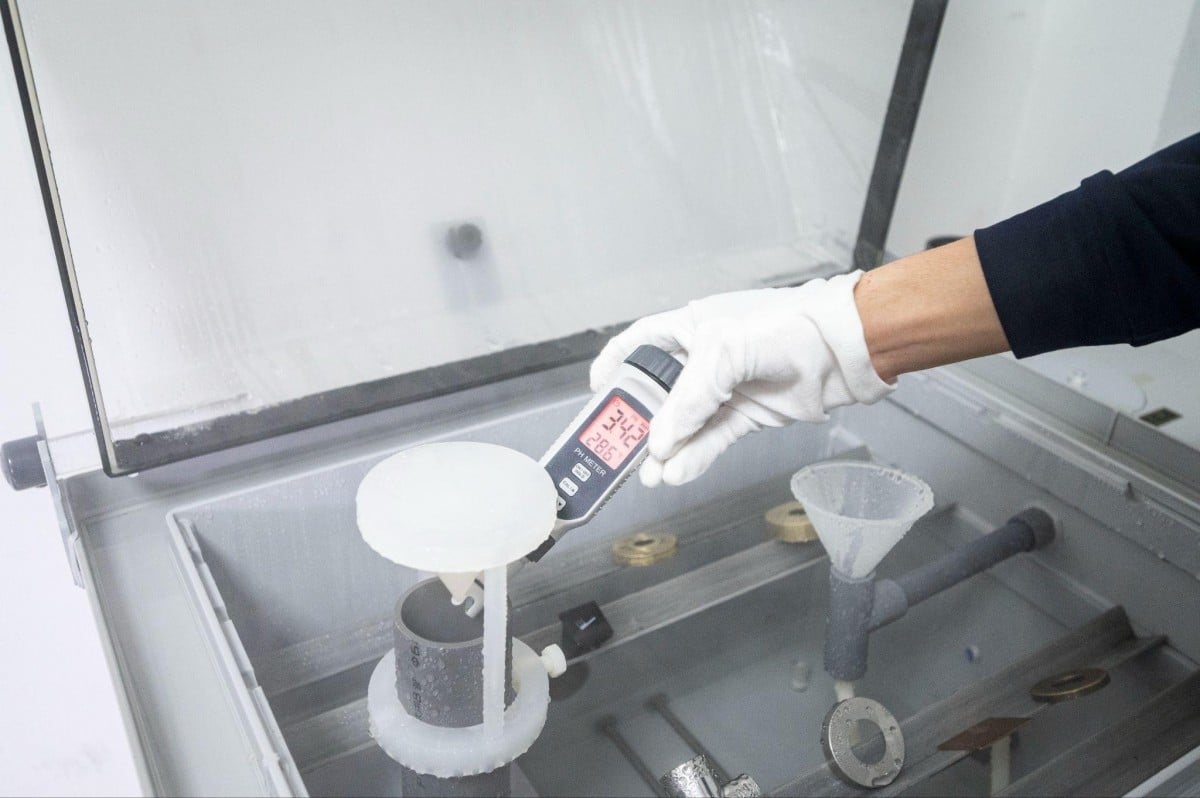
These tests are part of Watersino’s quality assurance program supported by international certifications: Watermark, WELS, WRAS, UPC and ISO 9001 (updated 2026). Production capacity is backed by a 7,000 square metre facility in Jiangmen and a 2,000 square metre showroom in Guangzhou with over 100,000 pieces of annual production capacity.
Table: 48Hour Acidic Salt Spray Test Observation Results
| Test Point | DZR Low‑Lead Brass | Zinc Alloy (Identical Surface Finish) |
| Product role | Water‑contact parts (faucet bodies, valves) & decorative hardware | Decorative trim / handles (for low‑corrosion‑risk scenarios only) |
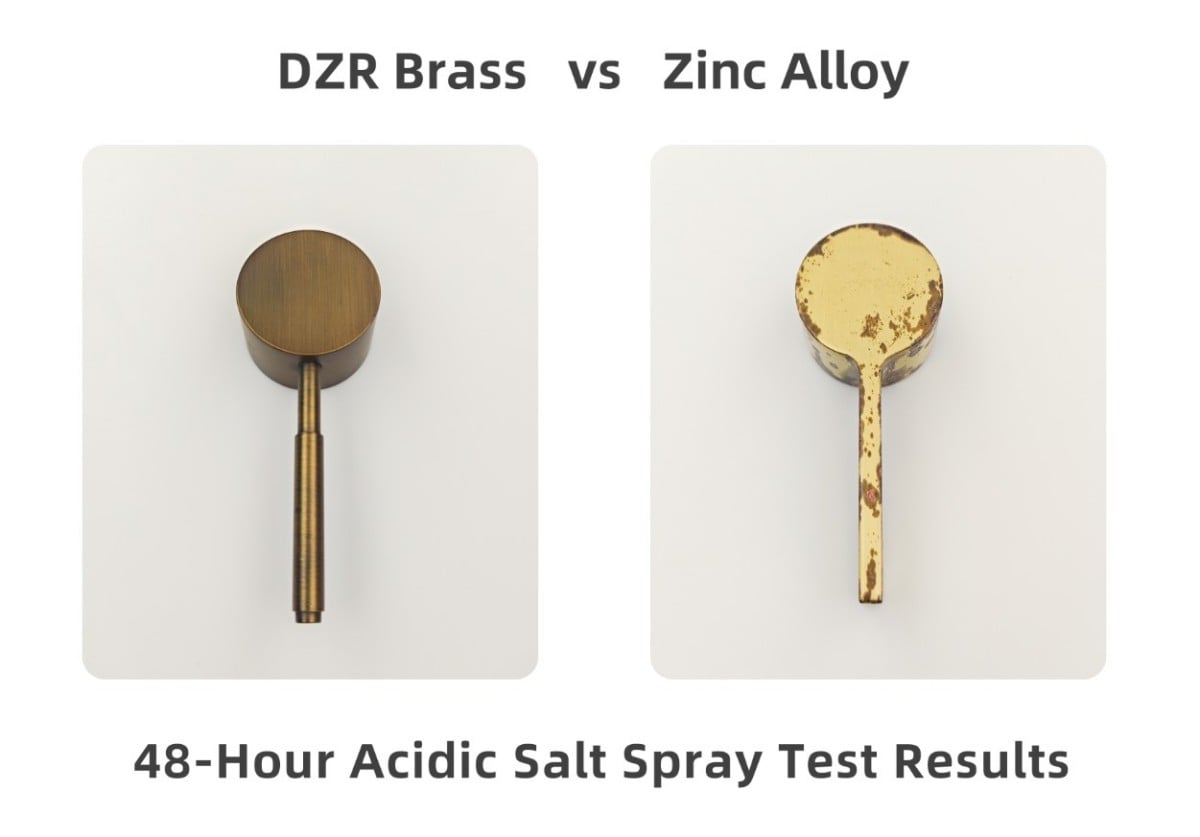
| Red rust after 48h | None | Extensive red rust; base substrate exposed across edges and flat surfaces |
| White rust / dezincification | No dezincification, no pitting | Widespread white corrosion deposits |
| Surface / plating condition | Light patina only; structurally intact | Severe finish delamination, blistering and edge cracking; large‑area surface degradation |
| Coating dependence | Performance driven by inherent alloy corrosion resistance | Surface finish failed; substrate degradation occurred beneath the identical finishing layer |
Key finding 1 — DZR low-lead brass for high demand hotel environments DZR low-lead brass showed no red rust, pitting or inter-granular corrosion during the complete 48 hour cycle. Surface alteration was confined to light patina with entire structural integrity preserved. DZR low-lead brass provides reliable long service life for water-contact parts such as tap bodies and valves, as well as decorative fittings in humid, coastal or chemically treated hotel environments.
Key finding 2 - Performance limitations of zinc alloy in corrosive circumstances Zinc alloy even with exactly matched surface finishing had serious finish deterioration following 48 hour acidic salt-spray exposure. Large areas of the sample surface exhibited extensive white rust, red rust and edge-area delamination. This shows that zinc alloy is risky in humid, coastal or heavily cleaned hotel environments – even for just decorative gear. It should be designated only for dry, low corrosion interior use with tight quality control.
Customer value:It’s a regulated data collection to give unambiguous specification direction to project specifiers. In high-humidity, coastal or regular chemical-cleaning situations, five-star hotel and premium residential projects work with DZR low-lead brass as the preferred substrate for water-bearing and decorative hardware. However, even with a premium finish, zinc alloy is not able to meet this level of corrosion resistance and still has a significant chance of field failure in demanding working settings.
Premium bathroom conditions are a mix of constant high humidity, strong cleaning products and constant water exposure – the main causes of premature hardware failure. Many of the material choices in the industry are based on anecdotal assertions and not scientifically proven research. Watersino’s test generates repeatable, auditable test proof to ASTM B117 / ISO 9227 standards, instead of subjective claims. This backs the brand’s guarantee of complying with worldwide plumbing and quality standards backed by certification.
The 48-hour acidic salt-spray data set transitions material selection from experience-based judgement to data-verified decision-making. Watersino will continue the comparison into extended exposure cycles (up to 96 hours) and more material categories such as stainless steel and various surface treatments. All outputs will be published as open access resources in the framework of the continuously running certification and quality checking procedure. Subscribe to receive notifications of new test datasets published.
Do you need the entire test report PDF, physical test samples or personalised material specification help for your hotel project? DZR brass hardware solutions certified for five-star global hospitality installations Contact our engineering sales team.
Q: Can we use zinc alloy for hotel bathroom fittings in coastal areas?
A: Zinc alloy even with high grade surface finishing suffers from significant corrosion under acidic salt spray circumstances. Not suited for hotel bathroom usage in coastal or high humidity areas.
Q: Why is DZR brass better than zinc alloy, with the same surface finish?
A: DZR brass has built-in dezincification-resistance corrosion qualities in the base alloy. The performance of zinc alloy is all in its surface layer. Once the finish is broken, the substrate will quickly corrode.
Q: Can DZR low lead brass be used for water contact and decorative bathroom parts?
A: Yes. DZR low-lead brass is a good choice for potable-water applications for valve and tap bodies and offers great corrosion resistance for decorative handles and trim in the tough hospitality situations.
 Hot News
 EN
EN