 EN

Brass Kitchen Faucet vs Stainless Steel: Durability Comparison
Choosing between brass and stainless steel kitchen sink faucets involves more than comparing appearance and purchase price. For homeowners, developers, distributors, contractors, and commercial buyers, the more useful question is which construction offers the right balance of durability, corrosion resistance, maintenance, serviceability, and long-term value.
Material composition is only one part of the comparison. Internal waterways, cartridge and valve construction, surface finish, manufacturing quality, installation requirements, and maintenance practices also influence how a faucet performs throughout its service life.
This guide compares brass and stainless steel kitchen faucets from a durability perspective, with particular attention to material construction, corrosion resistance, maintenance, internal components, residential and commercial applications, specialized drinking-water systems, regulatory requirements, finishes, sustainability, and total cost of ownership.
Brass vs. Stainless Steel: The Basic Difference
Brass is a copper-zinc alloy that has been widely used in faucet manufacturing because it is relatively easy to machine and can be formed into complex shapes. This makes it suitable for faucet bodies, connection configurations, and certain internal components while also supporting a broad selection of decorative finishes.
Stainless steel is an iron-based alloy containing chromium. The chromium contributes to the formation of a passive surface layer that provides corrosion resistance. Common faucet grades include 304 stainless steel, while 316 stainless steel incorporates molybdenum and is often selected for applications requiring greater resistance to certain chloride exposures.
The two materials therefore offer different manufacturing characteristics. Brass provides considerable machining and finishing flexibility, while stainless steel provides a family of grades with distinct corrosion properties. For buyers, identifying the actual alloy or stainless steel grade is more useful than relying on the generic material category.
Brass Faucet Performance
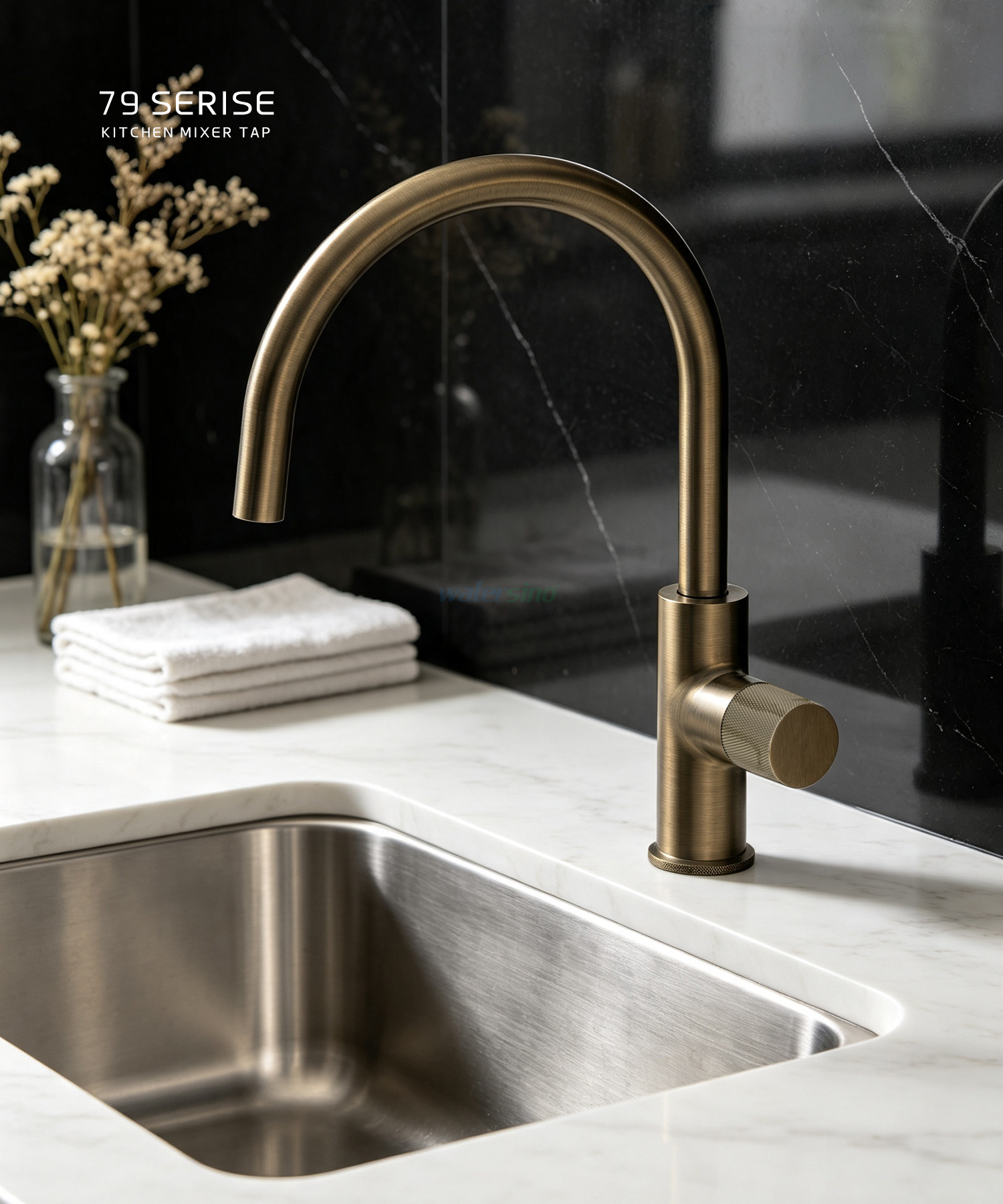
Brass has remained popular in faucet manufacturing because its machinability allows manufacturers to produce intricate body shapes, passages, threads, connection points, and other components efficiently. It also provides a suitable substrate for many plated, painted, and coated finishes, giving designers considerable freedom in residential and hospitality projects.
However, brass products are not necessarily identical simply because they share the same material category. Alloy composition can vary, and different components within a faucet may use different materials. In applications where dezincification is a concern, dezincification-resistant brass, commonly referred to as DZR brass, may be specified for relevant water-contact components.
For buyers comparing brass products from different suppliers, the actual alloy specification is therefore an important part of product documentation. It provides a clearer basis for comparison than a product description that simply states “brass construction.”
Stainless Steel Faucet Performance
Stainless steel offers a different approach to faucet construction. Its chromium-containing composition supports corrosion resistance at the surface, while the selected grade influences its performance in more demanding applications.
304 stainless steel is widely used for general-purpose products and combines corrosion resistance with practical fabrication characteristics. 316 stainless steel contains molybdenum, which can improve resistance to certain forms of corrosion associated with chloride exposure.
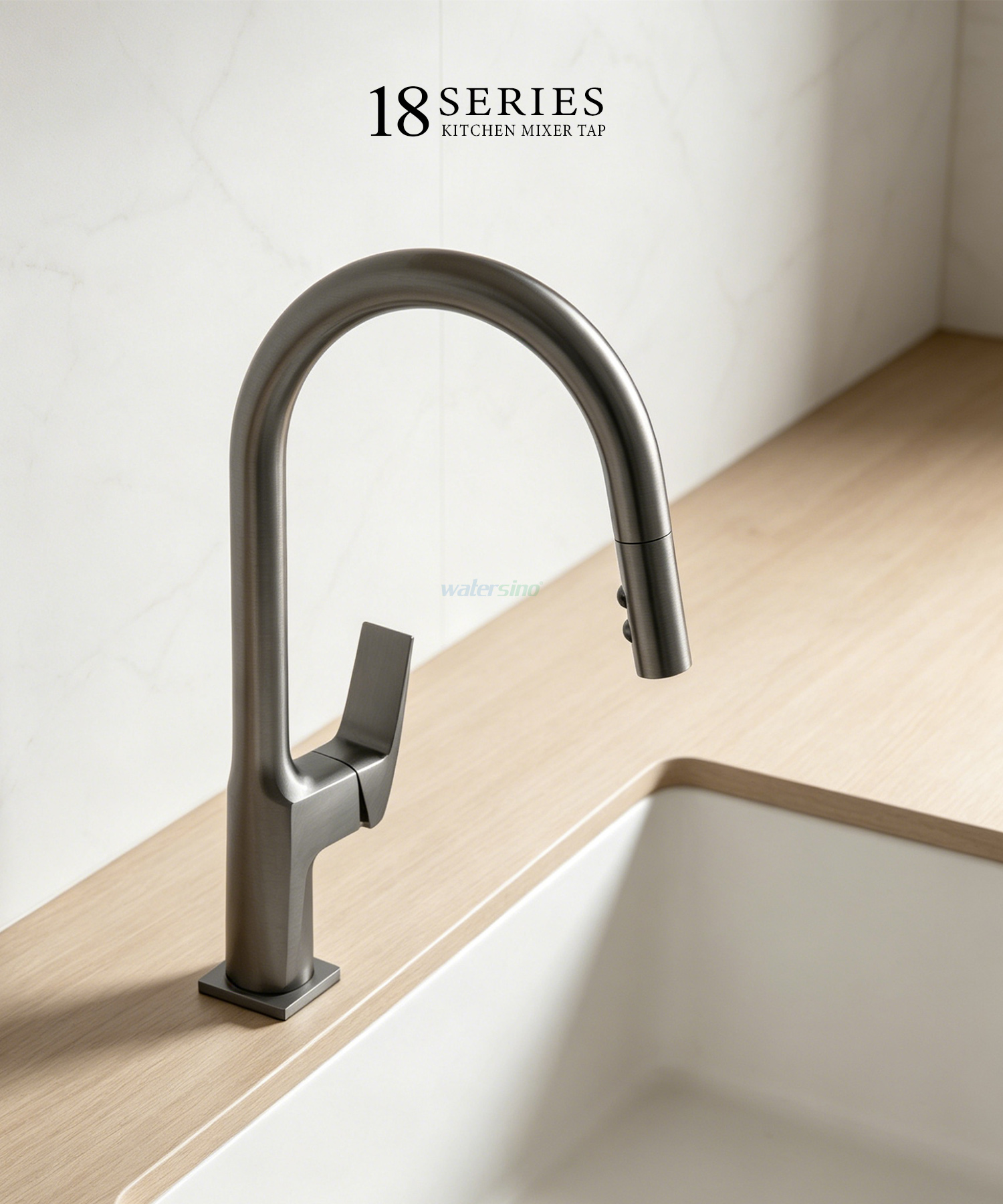
Stainless steel also has a naturally metallic appearance that works particularly well with contemporary kitchen designs. Brushed finishes provide a softer visual effect, while polished stainless steel creates a brighter surface but can make fingerprints and water spots more noticeable.
Brass vs. Stainless Steel Durability Comparison
A direct comparison helps buyers identify the main differences before reviewing individual product specifications.
| Factor | Brass Kitchen Faucet | Stainless Steel Kitchen Faucet |
|---|---|---|
| Material structure | Copper-zinc alloy | Iron-based alloy containing chromium |
| Material specification | Alloy composition and dezincification resistance | Stainless steel grade and corrosion characteristics |
| Manufacturing | Highly machinable and suitable for complex shapes | Uses forming, machining, welding, or other fabrication processes |
| Finish options | Broad range of decorative finishes | Strong fit for metallic, brushed, and polished finishes |
| Appearance | Warm and versatile, with extensive decorative options | Contemporary metallic appearance |
| Corrosion considerations | Dezincification can be relevant for susceptible alloys | Chloride-related corrosion can be relevant for some conditions |
| Serviceability | Primarily influenced by internal components and parts support | Primarily influenced by internal components and parts support |
| Commercial applications | Widely used in commercial and hospitality products | Widely used in commercial and institutional products |
| Drinking-water applications | Requires compliant water-contact materials and certification | Requires compliant water-contact materials and certification |
The comparison shows that neither material provides a universal durability advantage. The faucet's body is only one part of the finished assembly, and its service life also depends on the components and construction used throughout the product.
Durability in Different Water Conditions
Water-related wear includes both mineral buildup and corrosion. Hard water can leave deposits around aerators, cartridges, spouts, and other exposed areas, gradually affecting appearance and operation.
Stainless steel has a particular technical consideration when exposed to chloride-containing conditions because localized corrosion can occur if the environment and material grade are unfavorable. Brass presents a different concern through possible dezincification in susceptible alloys.
These mechanisms should be distinguished rather than treated as the same type of corrosion. In everyday kitchen use, regular aerator cleaning and removal of mineral deposits can also help maintain water flow and smooth operation.
Corrosion Resistance
Brass and stainless steel resist corrosion through different material mechanisms.
In susceptible brass alloys, dezincification can selectively remove zinc from the alloy and weaken affected areas. DZR brass is designed to improve resistance to this specific form of corrosion and may be used in applications where it presents a known concern.
Stainless steel relies on a chromium-rich passive layer for surface protection. Under aggressive conditions, particularly those involving chlorides, localized corrosion such as pitting can occur. The distinction between stainless grades is consequently relevant when specifying products for demanding installations.
Manufacturers should be able to identify the material specification used in the faucet and provide supporting technical information for projects where corrosion performance is a purchasing requirement.
Maintenance and Appearance
The finish largely determines how a faucet looks as it ages and how visible everyday marks become.
Unlacquered brass can gradually develop a natural patina. Some designers consider this change desirable because it gives the faucet a more aged or architectural appearance. Lacquered, plated, and coated brass finishes offer a more consistent visual result but require cleaning methods compatible with the protective surface.
Stainless steel does not develop the same type of brass patina. Brushed finishes tend to conceal minor marks, while polished surfaces provide greater reflectivity but can make fingerprints and water spots more apparent.
For both materials, abrasive cleaners and unsuitable tools can damage the finish. Routine cleaning using products recommended by the manufacturer is preferable to aggressive cleaning methods.
Internal Components and Faucet Longevity
The faucet body does not operate independently. Cartridges regulate water flow and temperature, valves control movement, seals prevent leakage, and hoses, aerators, connectors, and mounting components support the complete assembly.
These parts can experience substantial mechanical wear during everyday use. A durable outer body cannot compensate for an unreliable cartridge or poorly designed connection system.
For long-term ownership, replacement-part support is therefore important. Standardized cartridges, identifiable components, technical drawings, and continued availability of spare parts can make repairs substantially easier, particularly for distributors and commercial operators managing multiple installations.
Kitchen Faucets with Sprayer: What Changes?
A kitchen faucet with sprayer contains additional components that are repeatedly moved during normal operation. Pull-down and pull-out designs place mechanical demands on the hose, spray head, docking mechanism, and internal diverter.
The switching mechanism between stream and spray modes is also operated frequently. A well-designed system should maintain smooth hose movement, secure docking, and reliable switching throughout normal use.
For residential products, these characteristics primarily affect convenience and user experience. In high-use installations, they also influence maintenance frequency and the practicality of replacing individual spray-system components.
Residential Kitchen Faucet Applications
Residential buyers commonly prioritize design, functionality, installation compatibility, and price alongside durability.
Brass works particularly well in kitchens where the faucet is intended to complement traditional or decorative interiors. Its compatibility with different plating and coating processes allows manufacturers to offer a wide range of visual finishes.
Stainless steel is often chosen for contemporary kitchens because its metallic appearance coordinates naturally with stainless sinks and appliances.
An RV kitchen faucet serves a more specialized residential application. Compact dimensions, mounting configuration, plumbing connections, and replacement convenience can be important considerations where available installation space is limited or the faucet is exposed to mobile-use conditions.
Commercial Sink Faucets
A commercial sink faucet can experience substantially more operating cycles than a typical residential product. Restaurants, hotels, catering operations, institutional kitchens, and other professional facilities may use the faucet continuously during working hours.
This makes repairability particularly valuable. If a cartridge, hose, spray head, or valve can be replaced without replacing the complete faucet, maintenance can be completed more efficiently and operational interruptions can be reduced.
Commercial purchasing decisions should therefore consider the product's service design alongside its initial specifications. Spare-part availability, warranty response, installation compatibility, and repair procedures can have a direct effect on operating costs after installation.
Specialized Drinking-Water Applications
Specialized dispensing products require coordination with the equipment that supplies and processes the water.
A carbonated water tap is connected to a carbonation system and may operate with CO₂, pressurized water, dedicated tubing, fittings, and dispensing components. These connections need to be compatible with the complete system rather than evaluated as though the faucet were an ordinary kitchen tap.
A sparkling water tap has similar system-level requirements. The dispensing configuration, tubing arrangement, pressure conditions, cleaning procedures, and replacement components should be established during system design.
An instant hot and chilled water tap adds another layer of complexity by combining multiple water temperatures with equipment such as filters, heating or cooling systems, electrical controls, and safety mechanisms. In these installations, the faucet functions as part of an integrated dispensing system.
Commercial Drinking-Water Filtration Systems
A commercial drinking water filtration system may supply water to a dedicated dispensing faucet in offices, restaurants, hotels, healthcare facilities, and other commercial environments.
The connection between the filtration equipment and faucet needs to support the required flow rate and installation configuration. Tubing, fittings, filters, valves, pressure conditions, and maintenance access all form part of the overall system.
The faucet supplier and filtration-equipment supplier should establish connection and water-contact requirements before production. Clear technical documentation can help prevent compatibility problems when different suppliers are responsible for different parts of the installation.
Total Cost of Ownership
The purchase price of a faucet represents only the beginning of its cost over the service period. Installation, maintenance, replacement parts, warranty claims, labor, defective-product rates, logistics, compliance testing, inventory, and eventual replacement can all affect the final expense.
For commercial buyers and distributors, these downstream costs can become significant when products are installed in large quantities. A faucet that can be repaired using readily available components may reduce replacement and labor costs even when its initial unit price is higher.
Total cost of ownership therefore provides a more meaningful basis for commercial comparison than purchase price alone.
PVD Coatings and Finish Selection
A PVD coating faucet uses physical vapor deposition to create a controlled decorative surface. The technology can be applied to both brass and stainless steel products and is commonly used for specialty finishes such as gold, black, and other metallic colors.
The quality of a PVD finish depends on the complete finishing process rather than the coating technology alone. Surface preparation, substrate condition, coating parameters, production controls, and inspection all influence the final appearance.
For large projects, consistent finish quality across production batches is particularly important because visible variation can affect the perceived quality of an otherwise identical product.
Sustainable Faucet Manufacturing
Sustainable faucet manufacturing can address several stages of the product lifecycle, including material efficiency, production waste, packaging, manufacturing energy use, product longevity, repairability, and water efficiency.
Repairable products can provide a practical lifecycle advantage because a failed cartridge, valve, or hose does not necessarily require disposal of the entire faucet.
For B2B purchasers, environmental claims are more useful when supported by specific documentation. Material declarations, packaging information, environmental certifications, manufacturing data, and water-efficiency information can provide a clearer basis for evaluating sustainability.
Certification and International Faucet Regulations
Export products require attention to the regulatory requirements of the destination market. International faucet regulations vary by country and product category, meaning that documentation accepted in one market may not satisfy another.
Depending on the product and destination, relevant standards can include NSF/ANSI/CAN 61 for drinking-water system components, NSF/ANSI/CAN 372 for lead-content requirements, ASME A112.18.1/CSA B125.1 for plumbing supply fittings, EN 817 for certain mechanical mixing valves, and AS/NZS 3718 for water supply taps.
U.S. projects may also be subject to federal kitchen-faucet flow-rate requirements and additional state or local provisions.
The compliance process should begin before production is finalized. The supplier needs to know the destination market and final product configuration so that applicable certificates, test reports, material documentation, and technical information can be prepared for the correct product.
Brass vs Zinc Faucet: A Different Cost Comparison
A Brass vs Zinc Faucet comparison addresses a different purchasing decision from brass versus stainless steel.
Zinc alloy can be used where manufacturing economics, casting requirements, or product positioning favor a lower-cost construction. Brass may be selected for products positioned around material specification, machining capability, and long-term performance.
For distributors, the distinction can also help establish different product tiers. Rather than treating brass and zinc as interchangeable materials, buyers can match each construction to the intended price point, product category, and expected market positioning.
Questions to Ask a Faucet Manufacturer Before Ordering
Before placing a bulk order, distributors, contractors, developers, and project buyers should ask the supplier the following 14 questions:
What material, alloy, or stainless steel grade is used for the body and water-contact components?
Which components come into contact with drinking water?
Is DZR brass available where required?
What cartridge and valve brand, material, and design are included?
What finishes and flow rates are available?
Which standards or certifications have been obtained?
Are test reports available?
What pressure and durability testing has been completed?
What warranty is provided?
Which spare parts are available for long-term supply?
What is the MOQ and standard lead time?
Is OEM/ODM customization available?
Can the supplier provide complete technical and compliance documentation?
Can the supplier provide samples before bulk production?
For international orders, the final product configuration and supporting documentation should be confirmed before production begins.
Conclusion
Brass and stainless steel both have established roles in kitchen faucet manufacturing, but their strengths are different. Brass offers extensive machining and finishing flexibility, while stainless steel provides a range of grades and a naturally metallic construction.
The most useful durability comparison is therefore not based on the material name alone. The complete faucet assembly, including its body, internal components, finish, testing, and service support, provides a more reliable basis for evaluating long-term performance.
For residential buyers, design and everyday functionality may be central to the decision. Commercial and B2B purchasers typically need to consider serviceability, replacement support, compliance, and operating costs as part of the purchasing decision.
A properly specified faucet should ultimately be evaluated as a complete product against the requirements of the project, rather than selected solely because it is marketed as brass or stainless steel.
Table of Contents
- Brass Kitchen Faucet vs Stainless Steel: Durability Comparison
- Brass vs. Stainless Steel: The Basic Difference
- Brass Faucet Performance
- Stainless Steel Faucet Performance
- Brass vs. Stainless Steel Durability Comparison
- Durability in Different Water Conditions
- Corrosion Resistance
- Maintenance and Appearance
- Internal Components and Faucet Longevity
- Kitchen Faucets with Sprayer: What Changes?
- Residential Kitchen Faucet Applications
- Commercial Sink Faucets
- Specialized Drinking-Water Applications
- Commercial Drinking-Water Filtration Systems
- Total Cost of Ownership
- PVD Coatings and Finish Selection
- Sustainable Faucet Manufacturing
- Certification and International Faucet Regulations
- Brass vs Zinc Faucet: A Different Cost Comparison
- Questions to Ask a Faucet Manufacturer Before Ordering
- Conclusion