 EN

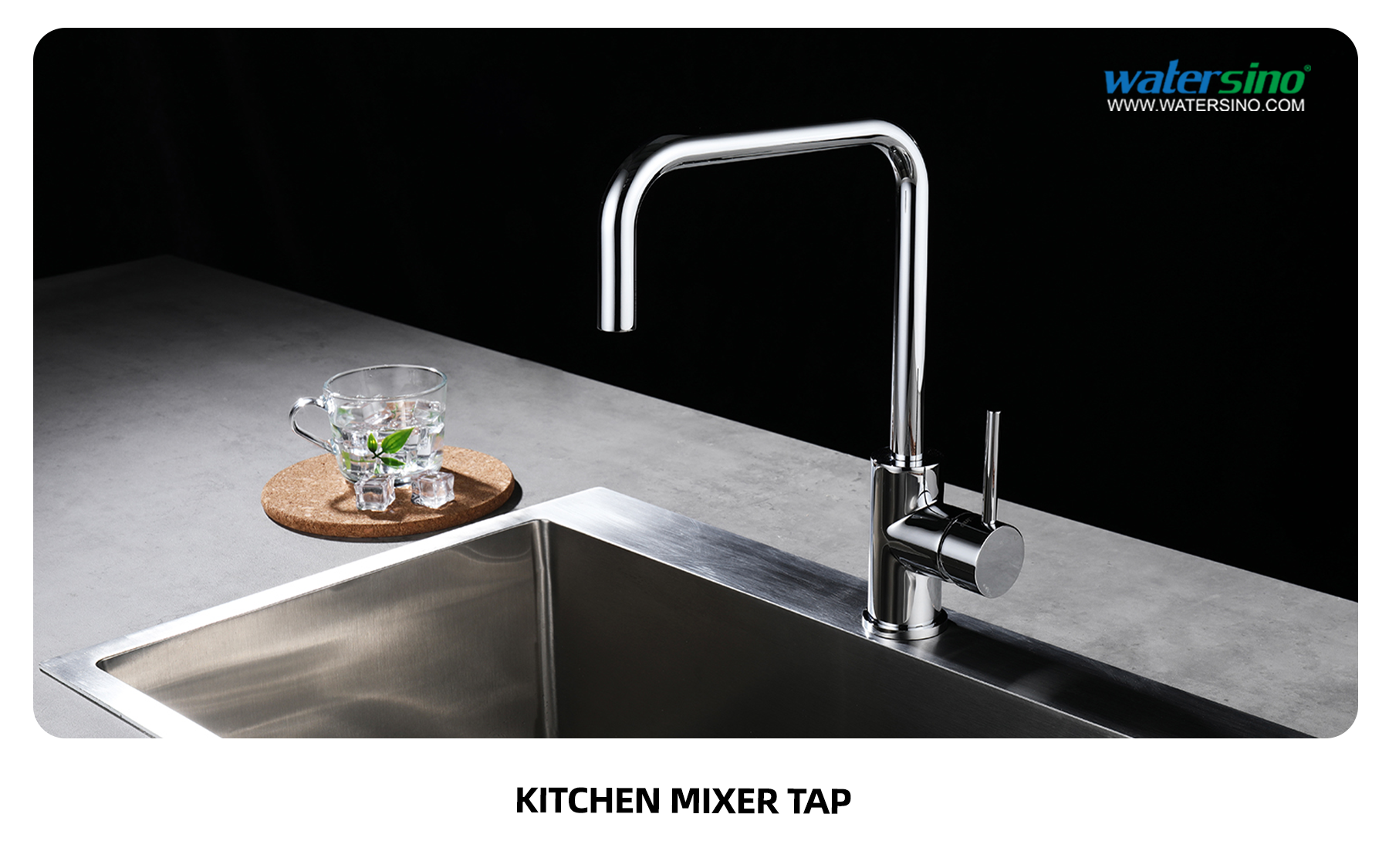
Zinc Alloy vs DZR Brass Kitchen Sink Faucets: Which Material Is Better?
When choosing kitchen sink faucets, material selection can have a significant impact on durability, corrosion resistance, maintenance, design flexibility, and long-term value. Among the materials commonly used in faucet manufacturing, zinc alloy and DZR brass represent two different approaches to balancing cost and performance.
Zinc alloy is often chosen for its manufacturing efficiency, lower cost, and design flexibility. DZR brass, meanwhile, is engineered to provide improved resistance to dezincification and is often preferred for drinking-water applications, demanding water conditions, and installations where long-term durability is a priority.
The choice between zinc alloy and DZR brass should not be based on material price alone. Water quality, operating temperature and pressure, frequency of use, internal waterway construction, certification requirements, and expected service life all need to be considered.
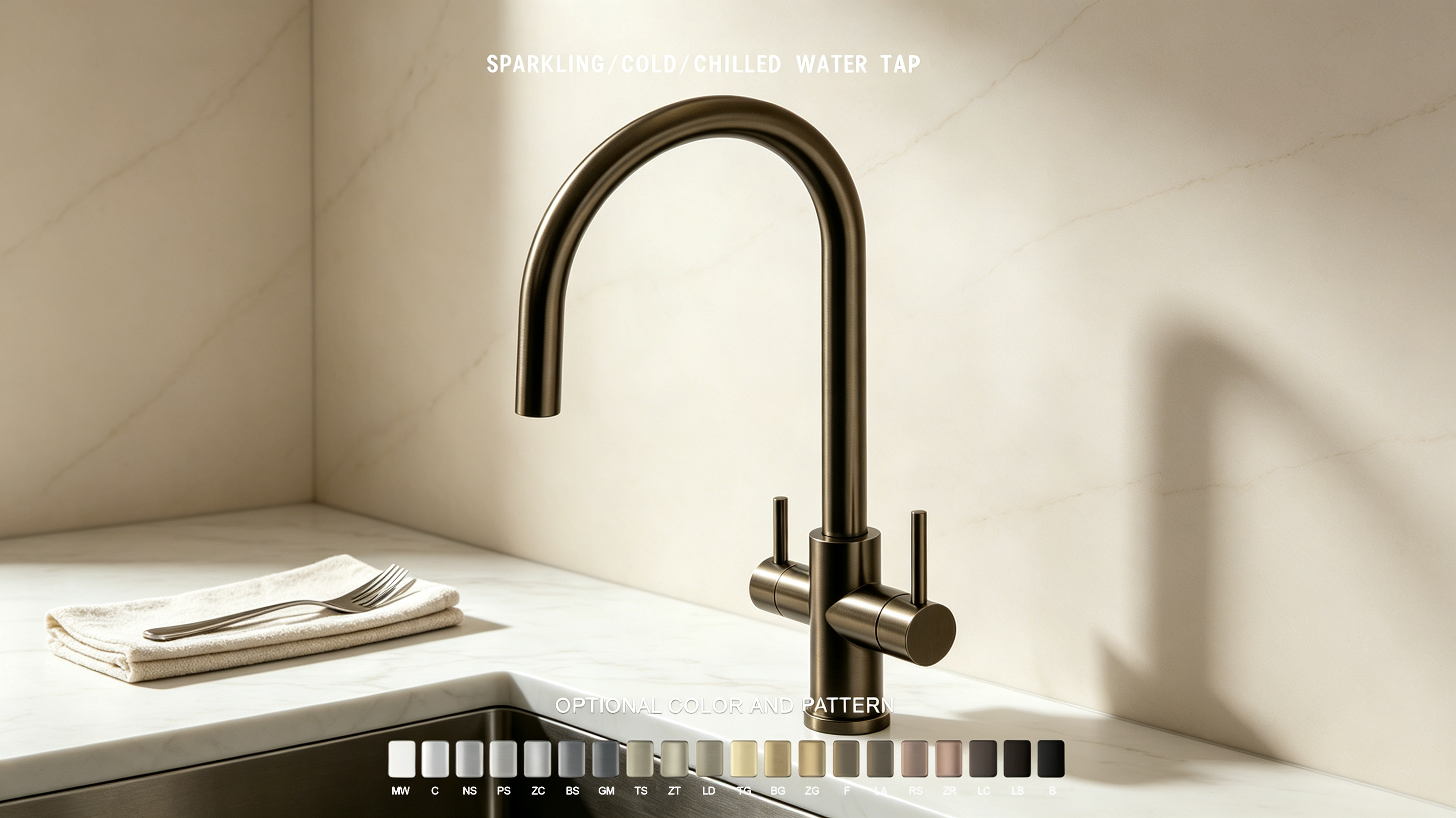
Understanding the Differences Between Zinc Alloy and DZR Brass
The fundamental difference between zinc alloy and DZR brass lies in their material composition, corrosion behavior, manufacturing characteristics, and typical applications.
Zinc Alloy Faucets
Zinc alloy is widely used in faucet manufacturing because it can be efficiently formed into complex shapes through die casting. Its relatively low manufacturing cost makes it attractive for residential products and cost-sensitive projects.
A zinc alloy faucet can be a practical choice when:
Initial purchase price is a major consideration
Complex or decorative faucet designs are required
Water and operating conditions are relatively moderate
Replacement costs need to remain low
The faucet is intended for standard residential or light-duty use
However, the performance of zinc alloy depends on the specific alloy, component design, protective finish, manufacturing quality, and operating environment. A lower price does not automatically indicate lower quality, just as a higher price does not automatically guarantee better performance.
DZR Brass Faucets
DZR brass is a brass alloy designed to provide improved resistance to dezincification. Dezincification occurs when zinc is selectively removed from susceptible brass alloys under certain water conditions, potentially weakening the material over time.
Because DZR brass is specifically designed to reduce this type of corrosion, it is commonly considered for:
Long-term installations
Drinking-water applications
More demanding water conditions
Frequent commercial use
Applications where material durability is important
Projects where replacement and maintenance costs need to be minimized
DZR brass is not immune to all forms of corrosion. Water chemistry, temperature, pressure, manufacturing quality, and the materials used in other wetted components can all influence actual faucet performance.
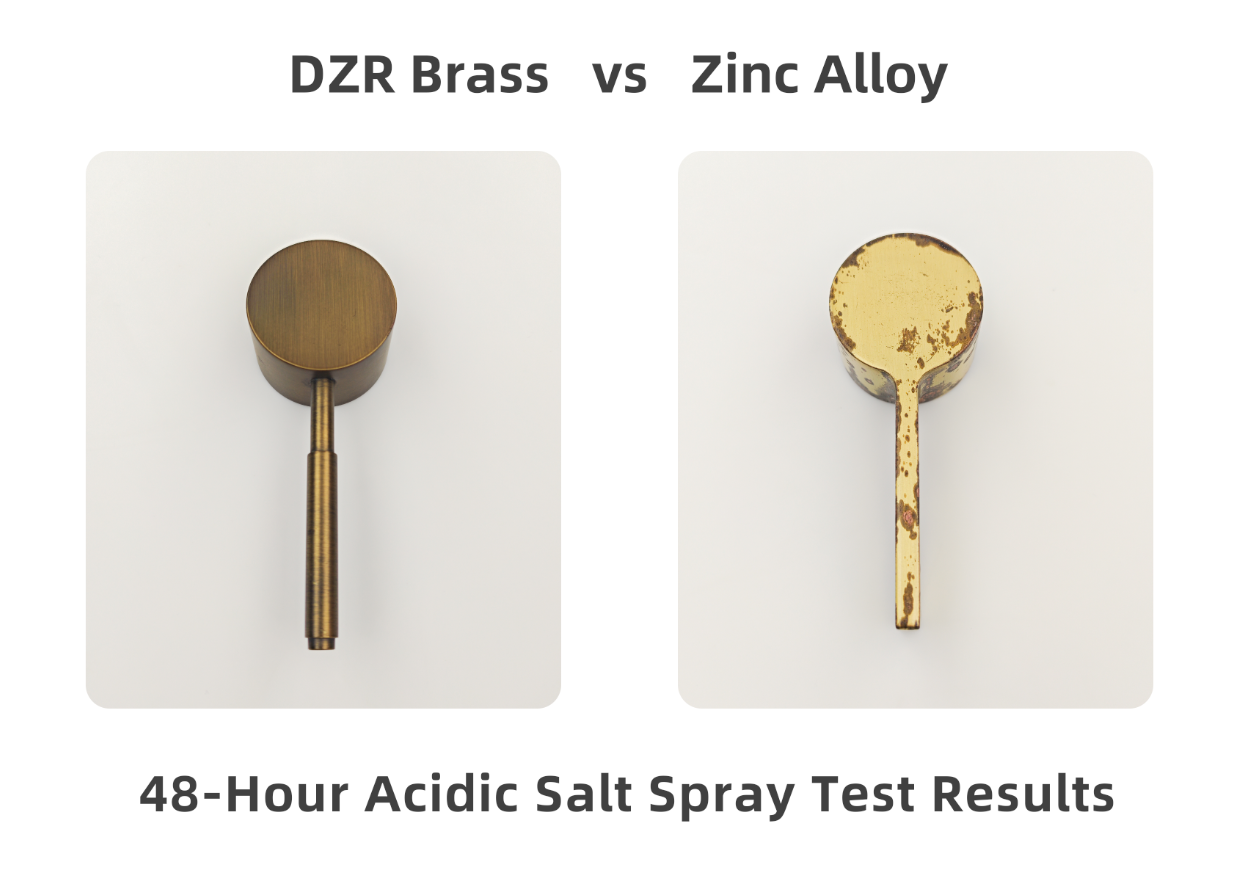
Comparing Cost, Durability, and Manufacturing Performance
The difference between zinc alloy and DZR brass becomes clearer when the two materials are evaluated across several practical factors.
| Evaluation Factor | Zinc Alloy | DZR Brass |
|---|---|---|
| Initial material cost | Lower | Higher |
| Manufacturing cost | Generally lower | Generally higher |
| Design flexibility | High | Moderate to high |
| Die-casting suitability | Excellent | More limited for some complex shapes |
| Dezincification resistance | Not applicable | Specifically designed to resist it |
| Long-term durability | Application dependent | Generally preferred for demanding applications |
| Drinking-water applications | Requires product-specific evaluation | Commonly preferred where dezincification resistance matters |
| High-temperature use | Requires careful design evaluation | Generally more suitable |
| High-cycle commercial use | Application dependent | Often preferred |
| Replacement economics | Lower initial investment | Potentially lower long-term cost |
| Typical application | Cost-sensitive and moderate-use applications | Long-life and demanding applications |
This comparison shows that zinc alloy and DZR brass should not simply be classified as “budget” and “premium” materials. The more useful question is which material is appropriate for the intended operating environment.
How Material Choice Influences Faucet Service Life
The faucet body is important, but it is only one part of the complete product.
A kitchen faucet may contain a body, cartridge, valves, seals, connectors, flexible hoses, spray head, internal waterways, and surface finish. The reliability of the complete faucet depends on how these components work together.
Water chemistry is another important factor. Faucets exposed to different water conditions may experience different levels of corrosion or material degradation even when their body materials are identical.
Zinc alloy can provide a cost-effective solution for standard installations where water conditions are relatively stable and service requirements are moderate. However, buyers should pay particular attention to water-contact components and the quality of the protective coating.
DZR brass offers an advantage when dezincification is a concern. For faucets expected to remain in service for many years, especially in drinking-water or demanding commercial applications, the additional material cost may be justified by the potential reduction in maintenance and replacement requirements.
For B2B purchasing, it is therefore important to compare the complete waterway construction rather than focusing only on the visible exterior.
Residential Kitchens: When Does Each Material Make Sense?
For standard residential kitchens, both zinc alloy and DZR brass may be suitable depending on the product specification and installation conditions.
A zinc alloy kitchen sink faucet may be appropriate for rental properties, entry-level residential developments, vacation homes, and cost-sensitive remodeling projects. Its lower manufacturing cost can help control project budgets while still providing manufacturers with considerable freedom in faucet shape and design.
DZR brass may be more attractive to homeowners who prioritize long service life, material durability, drinking-water compatibility, or performance under demanding water conditions.
For a primary kitchen expected to remain in service for many years, the additional cost of DZR brass may make sense when its material properties provide a meaningful performance advantage.
The best choice therefore depends on expected usage and ownership period rather than purchase price alone.
Carbonated Water Tap Applications Require Careful Material Selection
Material compatibility becomes increasingly important when a faucet is connected to a specialized drinking-water system.
A carbonated water tap delivers water containing dissolved carbon dioxide. When carbon dioxide dissolves in water, it forms carbonic acid, meaning carbonated water typically has a lower pH than ordinary drinking water.
This does not mean that every zinc alloy faucet will rapidly corrode when exposed to carbonated water. Actual performance depends on water chemistry, exposure time, protective coating, internal waterway design, and the complete system configuration.
However, continuous or frequent exposure to mildly acidic water makes material compatibility more important.
Zinc alloy should therefore be evaluated carefully when it is directly exposed to carbonated water. If the protective finish is damaged or unsuitable for the application, the underlying material may be more vulnerable to degradation.
DZR brass provides a more conservative material foundation when resistance to dezincification is an important consideration. For a carbonated water tap used frequently or continuously, DZR brass may be preferable, although the complete wetted path—including valves, seals, tubing, connectors, and internal waterways—should also be evaluated.
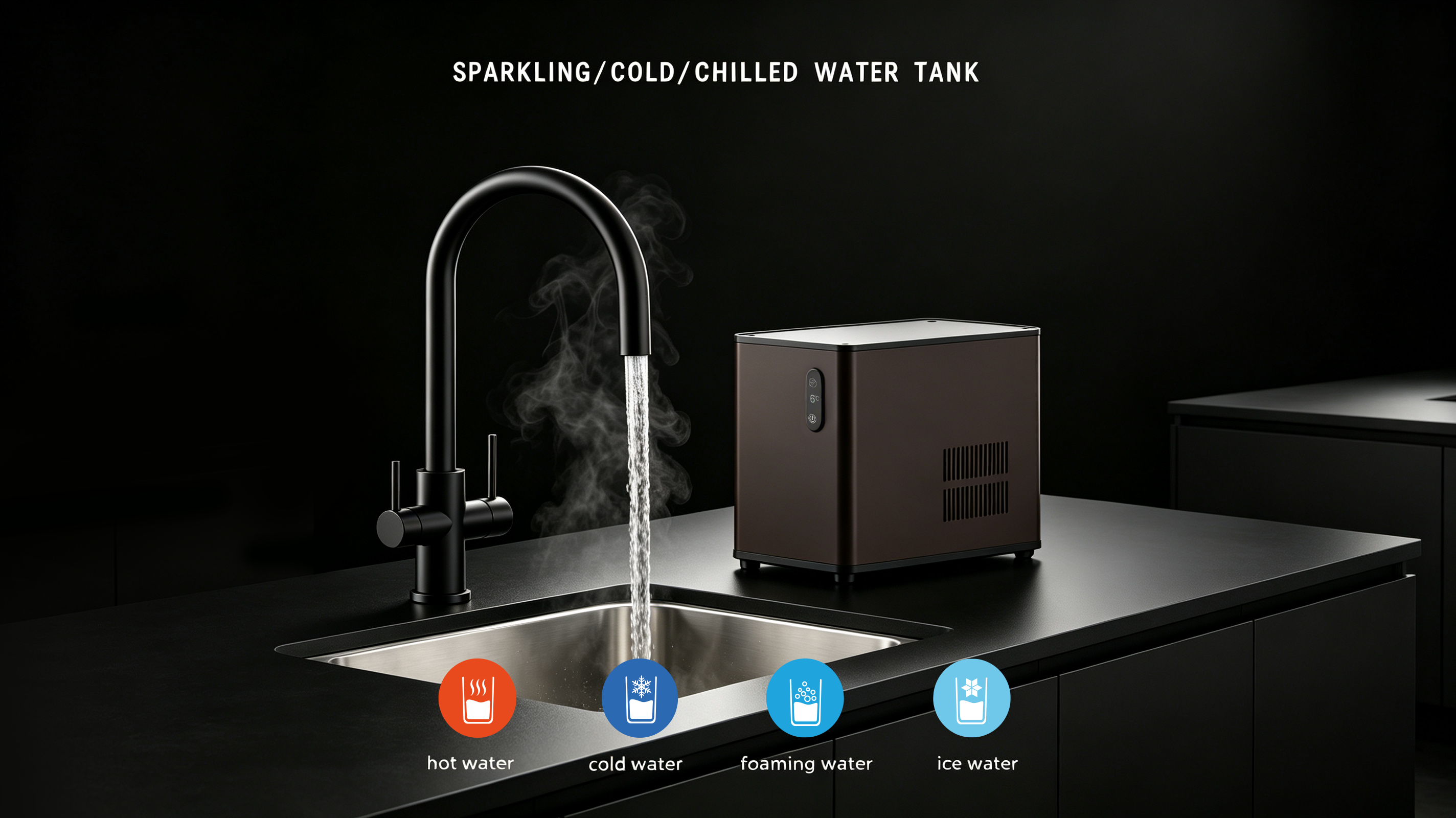
Sparkling Water Tap Systems and Water-Contact Components
A sparkling water tap may form part of an integrated system that supplies filtered, chilled, ambient, and carbonated water through a single faucet.
These systems can involve frequent operation and changes in water conditions. As a result, material compatibility and component durability become increasingly important.
A zinc alloy faucet may still be suitable for a budget-conscious residential sparkling-water installation when carbonation is used occasionally and the manufacturer has specifically designed the water-contact system for this purpose.
For premium residential systems or commercial installations with frequent daily use, DZR brass can provide a more conservative material specification when long-term stability is a priority.
The visible faucet body should not be considered in isolation. Buyers should verify that the entire water-contact assembly is suitable for sparkling or carbonated water.
Instant Hot and Chilled Water Tap: Temperature Matters
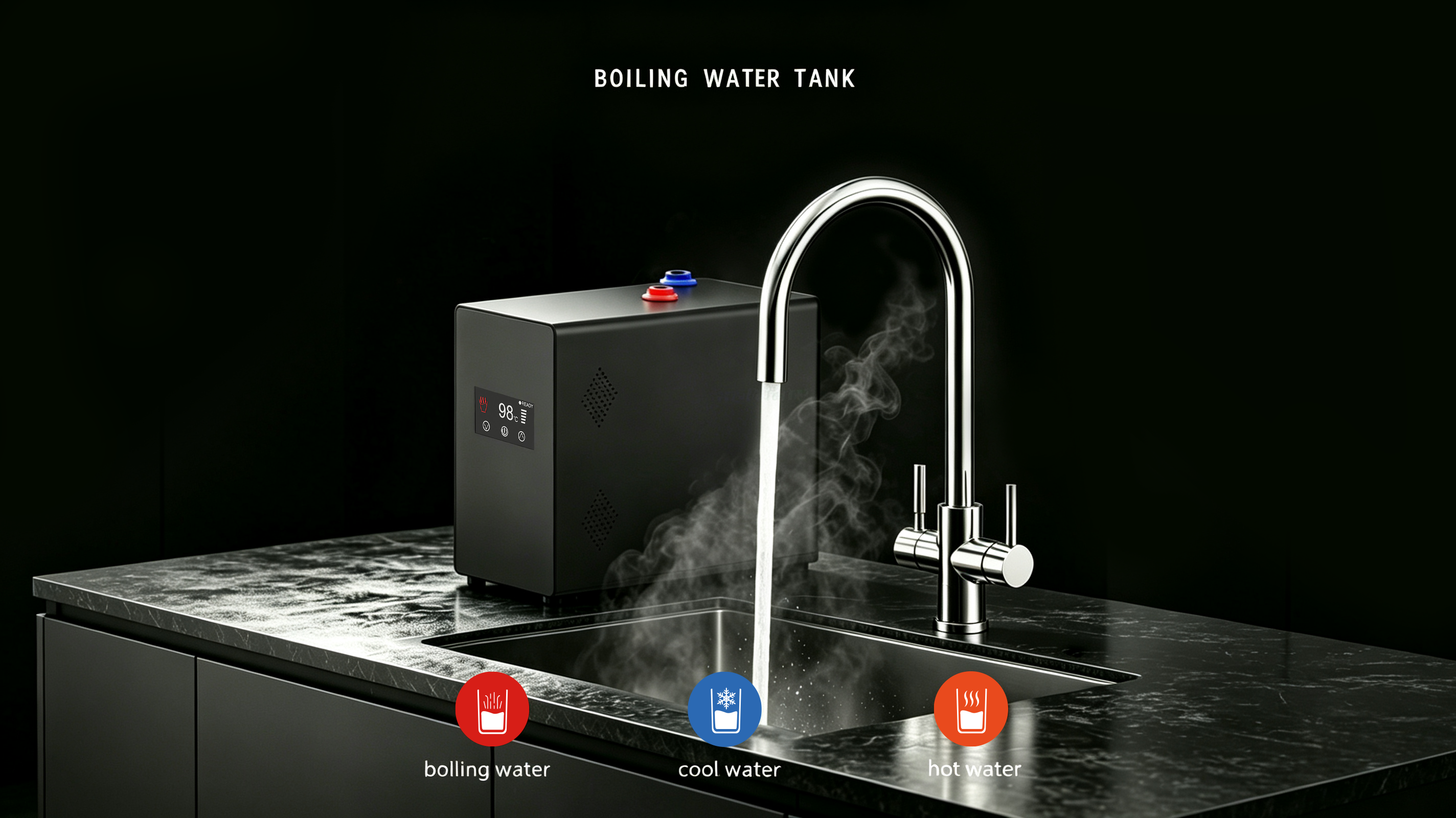
An instant hot and chilled water tap introduces additional requirements because it may deliver hot, chilled, and ambient water through different internal pathways.
Repeated heating and cooling cycles can create additional stress on valves, seals, connectors, and internal waterways. Temperature changes can also affect different materials in different ways.
Zinc alloy can perform adequately when the faucet has been specifically designed to isolate hot water from vulnerable components. Some designs use separate internal tubing or waterways for hot-water delivery, reducing direct thermal exposure to the main faucet body.
This type of construction should be confirmed through the manufacturer's product specification rather than assumed from the faucet's appearance.
DZR brass is generally a more conservative choice for applications involving frequent exposure to elevated temperatures and repeated thermal cycles. Nevertheless, the manufacturer's specified operating temperature and pressure limits should always be checked.
For an instant hot and chilled water tap, buyers should verify:
Maximum operating temperature
Maximum operating pressure
Internal waterway material
Cartridge and valve specifications
Seal material
Hot-water pathway design
Applicable testing and certification requirements
Why Commercial Sink Faucet Applications Are Different
A commercial sink faucet typically experiences more operating cycles than a residential faucet.
Restaurants, hotels, offices, healthcare facilities, food-service businesses, and other commercial environments may expose faucets to frequent operation, repeated cleaning, higher water exposure, and greater temperature variation.
Under these conditions, material selection becomes closely connected with total operating cost.
Zinc alloy can be suitable for lower-use commercial areas, utility sinks, back-of-house applications, or projects where initial replacement cost is a major consideration.
DZR brass may be more appropriate for high-traffic commercial sink faucets where long-term reliability, frequent operation, and reduced replacement requirements are important.
Although a lower-cost faucet may appear attractive during procurement, repeated replacement can introduce additional labor, maintenance, downtime, and installation costs.
For commercial projects, evaluating total cost of ownership can therefore provide a more accurate picture of long-term value.
Drinking Water Systems and Faucet Material Requirements
A commercial drinking water filtration system may operate throughout much of the working day and can place greater demands on the connected faucet.
In a low-use or light-commercial installation, zinc alloy may provide a cost-effective solution when its water-contact materials meet applicable requirements and the expected replacement cycle is acceptable.
For high-traffic drinking-water stations, DZR brass can offer a more conservative specification when long-term material stability and resistance to dezincification are important.
Commercial buyers should pay particular attention to the materials that actually come into contact with water.
Depending on the destination market and application, requirements may address lead content, extraction characteristics, drinking-water contact materials, product performance, and certification.
Therefore, neither zinc alloy nor DZR brass should automatically be considered compliant simply because of its material name. The exact faucet model and all relevant water-contact components need to be evaluated against the requirements applicable to the target market.
International Faucet Regulations and Compliance
International faucet regulations vary according to market, product category, installation environment, and intended application.
For products intended for the U.S. market, applicable requirements or certification programs may include standards such as NSF/ANSI/CAN 61 and NSF/ANSI/CAN 372, depending on the specific product and application.
European projects may involve standards such as EN 817 for applicable mechanical performance requirements, together with additional national or regional requirements concerning drinking-water contact materials.
In Australia, AS/NZS 3718 applies to certain water supply products. UK projects may also consider WRAS approval depending on the application and installation requirements.
The material itself does not automatically establish compliance.
A zinc alloy faucet can be compliant when the complete product is appropriately designed, tested, and certified. Similarly, a DZR brass faucet must satisfy the applicable requirements for its intended market and application.
For international buyers, certification and compliance should be reviewed during product selection and product development rather than after production has already started.
Initial Purchase Price vs Long-Term Cost
One of the most obvious differences between zinc alloy and DZR brass is the relationship between initial investment and potential long-term value.
Zinc alloy generally offers lower material and manufacturing costs, making it attractive for projects where purchase price is a major consideration.
DZR brass generally requires a higher initial investment. However, the additional cost may be justified when the project prioritizes longer service life, demanding water conditions, frequent use, or reduced maintenance and replacement requirements.
A useful total-cost analysis should include:
Purchase price
Installation cost
Maintenance
Replacement parts
Labor
Downtime
Replacement frequency
Expected service life
For high-volume commercial projects, these costs can become considerably more important than the difference in the original faucet purchase price.
A slightly more expensive faucet can therefore deliver better overall value if it reduces replacement frequency or maintenance requirements.
The Faucet Body Is Only One Part of the Equation
Although the zinc alloy vs DZR brass comparison is important, material alone should not be used to determine faucet quality.
Cartridge Performance
The cartridge has a major influence on handle operation, flow control, leakage resistance, and user experience.
Internal Waterways
The water-contact construction may be more important than the visible exterior body material, particularly for drinking-water and specialized water-delivery applications.
Valves and Seals
Valve and seal specifications affect leakage resistance, temperature performance, chemical compatibility, and overall service life.
Surface Finish
The substrate, surface preparation, coating system, and manufacturing process all contribute to finish durability.
Manufacturing Quality
Even a high-grade material can perform poorly if casting, machining, assembly, or quality control is inconsistent.
Installation Conditions
Incorrect installation, excessive pressure, unsuitable water conditions, or improper cleaning can shorten the service life of almost any faucet.
For this reason, a well-designed zinc alloy faucet may outperform a poorly manufactured brass faucet in a particular application.
Which Material Should You Choose?
The decision should be based on the actual operating conditions rather than on the assumption that one material is universally superior.
Zinc Alloy May Be Suitable When:
Zinc alloy can be considered when the project prioritizes:
Lower initial cost
High design flexibility
Moderate residential use
Relatively stable water conditions
Predictable replacement cycles
Cost-sensitive construction or remodeling
For standard residential applications, zinc alloy can provide a practical balance between manufacturing cost and functionality when the complete product is appropriately designed.
DZR Brass May Be Preferable When:
DZR brass may be a better fit when the project requires:
Longer expected service life
Improved resistance to dezincification
Drinking-water applications
Frequent commercial operation
More demanding water conditions
Repeated thermal cycling
Reduced long-term maintenance and replacement risk
For specialized products such as carbonated water taps, sparkling water taps, instant hot and chilled water faucets, commercial drinking-water systems, and high-use commercial sink faucets, DZR brass may provide a more conservative material specification.
Nevertheless, the complete water-contact system should always be evaluated.
Zinc Alloy vs DZR Brass: The Final Decision
The choice between zinc alloy vs DZR brass kitchen sink faucets ultimately depends on the intended application, operating environment, expected service life, and total cost of ownership.
Zinc alloy offers advantages in manufacturing efficiency, design flexibility, and initial cost. It can be a practical choice for many residential and cost-sensitive applications where water conditions are relatively moderate and replacement requirements are predictable.
DZR brass offers improved resistance to dezincification and is often preferred for drinking-water applications, demanding water conditions, high-use commercial environments, and projects where long-term durability is more important than minimizing the initial purchase price.
Neither material is automatically the right choice for every faucet.
The most reliable purchasing decision comes from evaluating the complete faucet specification, including:
Faucet body material
Internal waterway construction
Cartridge
Valves
Seals
Surface finish
Operating temperature
Operating pressure
Expected service conditions
For homeowners, contractors, distributors, and B2B buyers, the key question is not simply, “Is zinc alloy or DZR brass better?”
The more useful question is:
Which material provides the right balance of performance, compliance, durability, and cost for this specific kitchen sink faucet application?
Choosing the Right Kitchen Sink Faucets for Your Application
When sourcing kitchen sink faucets, compare the complete product specification rather than focusing only on appearance or purchase price.
A zinc alloy faucet can be an effective solution for standard residential and cost-sensitive projects, while DZR brass may be a better choice for demanding drinking-water, commercial, high-temperature, or long-service applications.
For specialized systems involving a carbonated water tap, sparkling water tap, or instant hot and chilled water tap, material compatibility should be evaluated across the entire water-contact pathway.
Likewise, buyers sourcing a commercial sink faucet or connecting a faucet to a commercial drinking water filtration system should consider operating frequency, water chemistry, temperature, certification, maintenance requirements, and total cost of ownership.
By evaluating these factors together and checking the relevant international faucet regulations, buyers can make a more informed material decision and select a faucet specification that matches the actual requirements of the project.
Table of Contents
- Zinc Alloy vs DZR Brass Kitchen Sink Faucets: Which Material Is Better?
- Understanding the Differences Between Zinc Alloy and DZR Brass
- Comparing Cost, Durability, and Manufacturing Performance
- How Material Choice Influences Faucet Service Life
- Residential Kitchens: When Does Each Material Make Sense?
- Carbonated Water Tap Applications Require Careful Material Selection
- Sparkling Water Tap Systems and Water-Contact Components
- Instant Hot and Chilled Water Tap: Temperature Matters
- Why Commercial Sink Faucet Applications Are Different
- Drinking Water Systems and Faucet Material Requirements
- International Faucet Regulations and Compliance
- Initial Purchase Price vs Long-Term Cost
- The Faucet Body Is Only One Part of the Equation
- Which Material Should You Choose?
- Zinc Alloy vs DZR Brass: The Final Decision
- Choosing the Right Kitchen Sink Faucets for Your Application