 EN

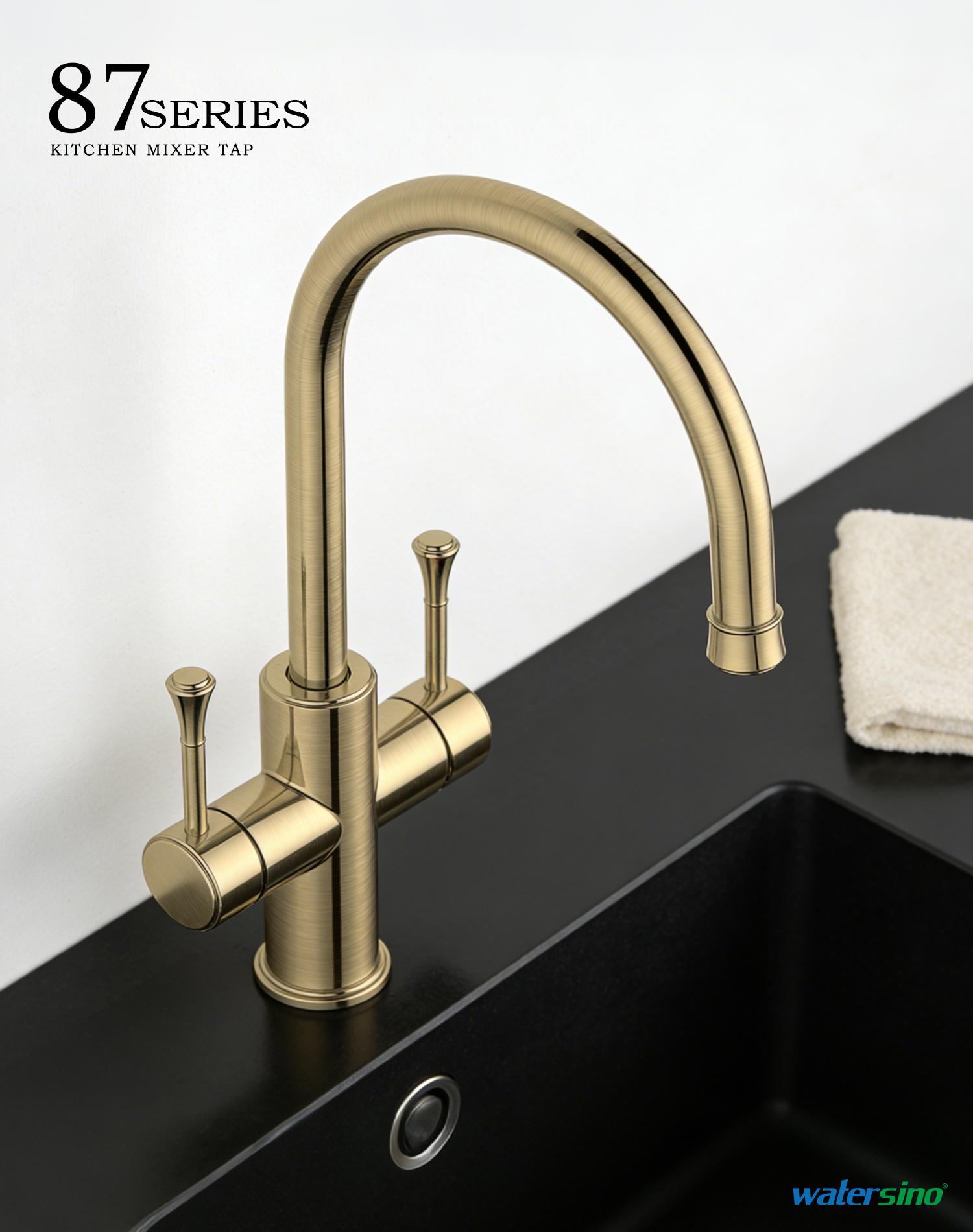
Kitchen Faucet Brands Premium vs Budget Comparison: How to Choose the Right Faucet
Choosing between premium and budget kitchen faucet brands is not simply a matter of comparing prices. In a meaningful kitchen faucet brands premium vs budget comparison, buyers need to look beyond brand reputation and evaluate material selection, cartridge quality, finish technology, spray functions, certifications, warranty support, manufacturing consistency, and total cost of ownership.
For homeowners, developers, distributors, contractors, and hospitality buyers, the best kitchen faucet brands are not necessarily the brands with the highest prices. A premium faucet may provide more advanced features, better finish options, stronger customization, or longer-term support, while a well-specified budget faucet can deliver the essential performance required for a cost-sensitive project.
The better approach is to compare premium and budget kitchen faucet brands according to documented specifications and intended application. This makes it easier to determine whether the additional cost of a premium faucet provides measurable value.
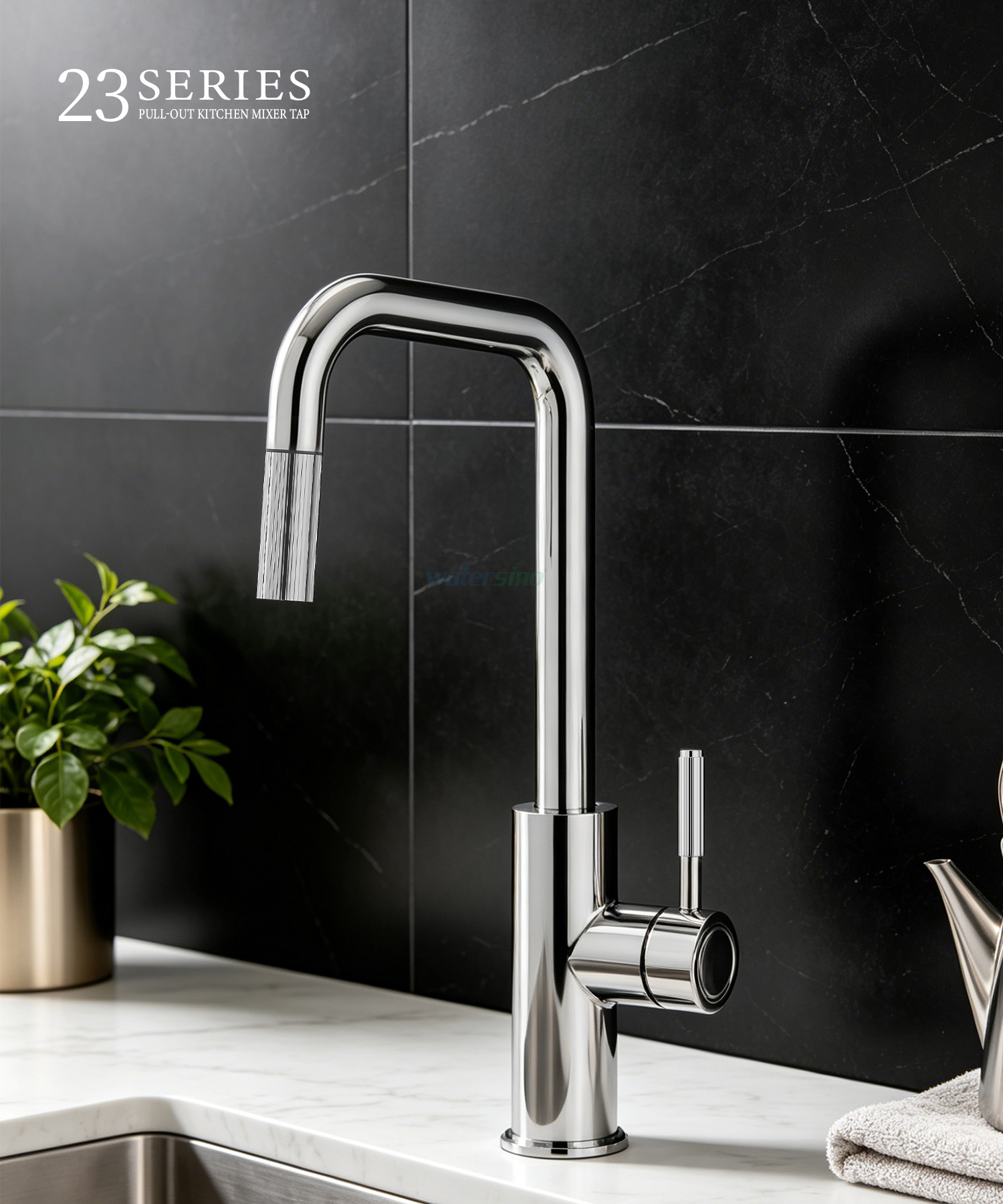
What Separates Premium and Budget Kitchen Faucets?
The main difference between premium and budget kitchen faucet brands is usually found in the combination of materials, internal components, finishing processes, product development, quality control, customization, and after-sales support.
Premium kitchen faucet brands typically invest more heavily in:
Material selection
Internal component quality
Product design and ergonomics
Surface finishing technology
Product testing
Quality control
OEM/ODM customization
Warranty and replacement-part support
Budget kitchen faucet brands generally focus on delivering essential functions at a competitive price. Modern budget models can still include ceramic cartridges, pull-down spray heads, single-handle operation, swivel functions, and contemporary finishes.
As a result, the feature gap between premium and budget faucets has become smaller.
This makes the central question in a kitchen faucet brands premium vs budget comparison less about which product is more expensive and more about:
What additional performance, durability, functionality, service, or specification does the premium faucet provide compared with the budget alternative?
That is the foundation of a useful premium vs budget faucet comparison.
How Faucet Materials Affect Price and Performance
Material selection is one of the first factors to examine when comparing kitchen faucet brands at different price points.
Brass is widely used for faucet bodies and water-contact components because of its strength and resistance to corrosion. However, not every faucet marketed as a brass faucet has the same construction.
A premium kitchen faucet may specify brass for a larger proportion of the faucet assembly, while a budget model may combine brass water-contact components with zinc alloy or other cost-efficient materials in selected parts.
This does not automatically mean that a budget faucet is inferior. Zinc alloys can be appropriate for specific components and can help manufacturers control production costs.
Brass vs Zinc Faucet: Which Material Fits Your Project?
The Brass vs Zinc Faucet question should be evaluated according to the specific component and intended application rather than brand positioning alone.
Buyers should compare:
Faucet body material
Waterway material
Handle material
Internal component materials
Spray-head construction
Mounting components
Applicable material standards
What to Know About a DZR-Free Brass Faucet
Buyers may also encounter the term DZR-free brass faucet when comparing brass faucet specifications. This terminology should be examined carefully.
DZR generally refers to dezincification-resistant brass. Because terminology can vary between suppliers and product descriptions, buyers should verify the actual alloy specification and supporting documentation instead of relying solely on marketing language.
For B2B buyers, material transparency can be more valuable than brand positioning. Two faucets may have nearly identical external appearances while having substantially different internal construction and material specifications.
Are Ceramic Cartridges Worth Paying More For?
Cartridge quality is another important factor in a kitchen faucet brands premium vs budget comparison.
Many premium kitchen faucet brands use ceramic disc cartridges because they can provide smooth handle operation and reliable flow control. However, ceramic cartridges are no longer exclusive to premium products. They are widely available in mid-range and budget kitchen faucets.
Therefore, simply stating that a faucet uses a ceramic cartridge does not prove that it belongs to a premium product category.
Buyers should also evaluate:
Cartridge supplier
Cartridge quality
Service-life testing
Replacement-part availability
Compatibility with local plumbing conditions
Warranty coverage
Ease of maintenance
A premium faucet can provide greater long-term value when higher-quality components are combined with reliable replacement-part support.
At the same time, a budget kitchen faucet can be a strong value proposition if its components are reliable and replacement parts are readily available.
This is why total cost of ownership is often more useful than initial purchase price when comparing premium and budget faucet brands.
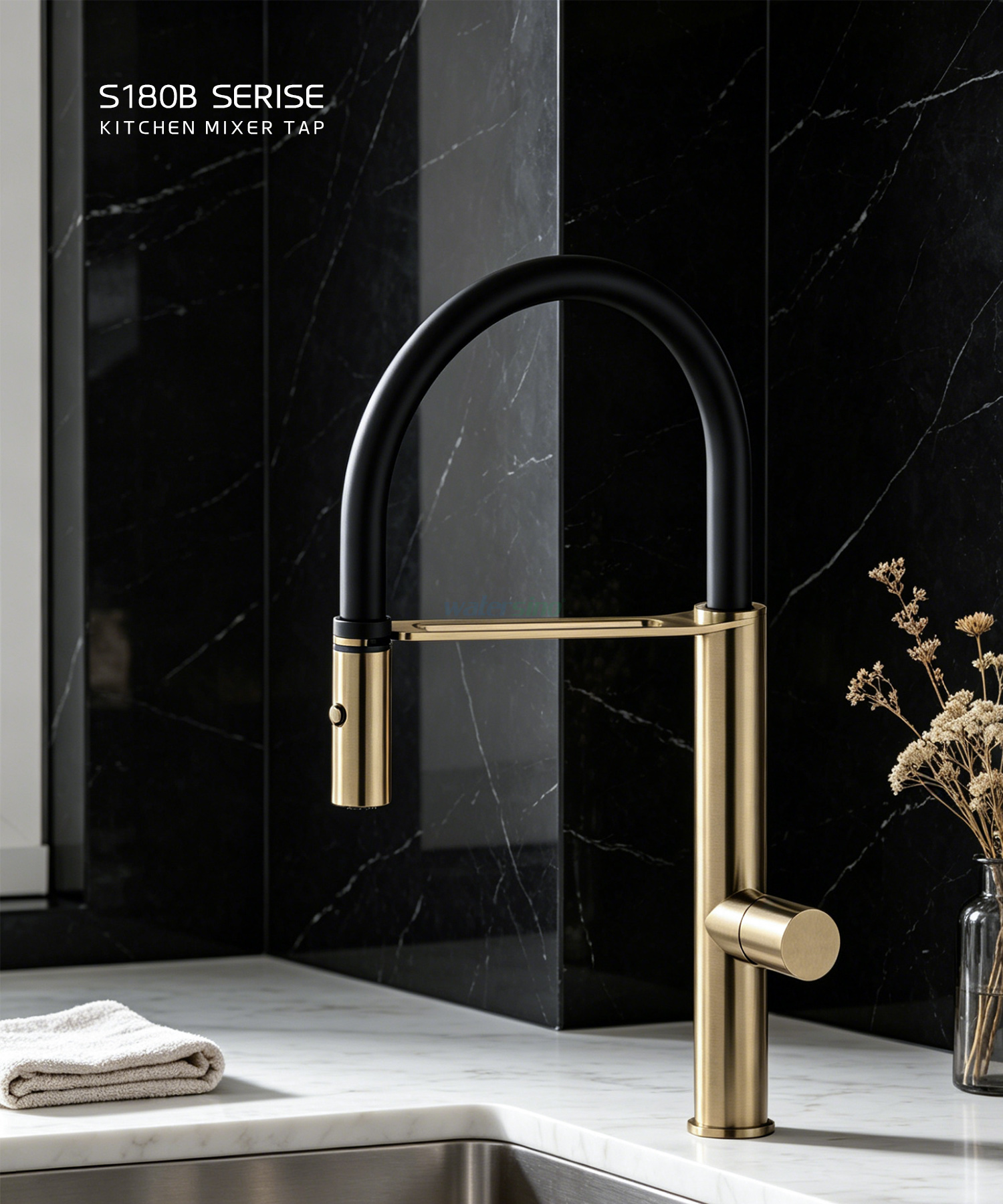
Kitchen Faucet with Sprayer: Comparing Function and Usability
A kitchen faucet with sprayer is now common across both premium and budget product ranges.
Pull-down and pull-out faucets can make rinsing dishes, cleaning the sink, and filling containers easier. Depending on the model, a spray system may include:
Multiple spray patterns
Flexible hoses
Docking mechanisms
Swivel functions
Easy-clean nozzles
Different water-flow modes
Premium kitchen faucet brands may place greater emphasis on smooth hose movement, stronger docking systems, spray-head ergonomics, refined switching mechanisms, multiple spray modes, and long-term component durability.
Budget brands may provide many of the same basic functions with simpler mechanisms and fewer customization options.
For a rental property or entry-level housing project, the basic functionality of a budget faucet may be sufficient. For a luxury residential project or hospitality application, smoother operation and enhanced durability may justify the additional cost.
The key is therefore to compare how the spray system performs rather than simply checking whether the faucet has a sprayer.
PVD Coating Faucet: Does a Premium Finish Justify the Cost?
Finish technology is another important consideration when comparing premium and budget kitchen faucet brands.
A PVD coating faucet uses physical vapor deposition to create a decorative and protective surface. PVD finishes can be attractive for projects where appearance, finish consistency, and surface durability are important.
Premium kitchen faucet brands may offer a wider range of PVD colors and place greater emphasis on finish consistency, process control, and product testing.
Budget brands may reserve PVD finishes for selected models while using conventional finishing processes on lower-cost products.
However, a PVD finish should not automatically be considered superior simply because the faucet is more expensive. Actual finish performance can depend on the coating system, substrate, manufacturing process, quality control, testing, and maintenance environment.
For distributors and B2B purchasers, useful questions include:
What finish technology is used?
What substrate is underneath the coating?
What tests have been performed?
Is finish consistency maintained between production batches?
What maintenance conditions are recommended?
These questions provide a stronger basis for evaluating premium vs budget kitchen faucets than brand positioning alone.
Comparing Features Across Different Price Points
The following comparison summarizes the major differences buyers may encounter:
| Specification | Premium Kitchen Faucet | Budget Kitchen Faucet |
|---|---|---|
| Material | May use higher-specification or more extensive brass construction | May combine brass and other cost-efficient materials |
| Cartridge | Ceramic cartridge with emphasis on quality and durability | Ceramic cartridges are also commonly available |
| Spray System | More refined mechanisms and additional functions | Essential pull-down or pull-out functionality |
| Finish | More PVD and customized finish options | Standard finishes and selected PVD models |
| Customization | Greater OEM/ODM flexibility | Usually more standardized |
| Certification | May provide broader documentation depending on market | Must still meet applicable requirements |
| Parts Support | Often stronger long-term support | Depends on supplier and product program |
| Price | Higher initial cost | Lower initial cost |
| Best Fit | Luxury residential, hospitality, design-focused projects | Rental, entry-level, volume, and cost-sensitive projects |
This comparison shows why there is no universal winner between premium and budget kitchen faucet brands.
The right choice depends on which specifications actually matter for the project.
When Budget Kitchen Faucets Offer Better Value
Budget kitchen faucet brands can be an excellent choice when a project prioritizes cost efficiency and essential functionality.
Budget faucets may be suitable for:
Rental properties
Entry-level residential developments
Vacation homes
Temporary installations
Large-volume housing projects
Cost-sensitive distribution channels
Modern budget kitchen faucets can include ceramic cartridges, pull-down spray heads, single-handle designs, and contemporary finishes.
A lower purchase price does not automatically mean inferior performance. The important question is whether the product meets the actual requirements of the installation.
For example, a developer supplying hundreds or thousands of housing units may prefer a reliable budget or mid-range faucet with readily available replacement parts instead of paying for premium features that end users may not need.
In this situation, value comes from specification-to-cost efficiency rather than premium brand positioning.
When Premium Faucets Are Worth the Investment
Premium kitchen faucet brands become more attractive when a project places greater emphasis on durability, design, finish quality, user experience, customization, consistency, or long-term support.
A premium faucet may be justified for:
High-end residential developments
Luxury homes
Hospitality projects
Design-focused kitchens
Long-term property installations
Projects requiring customized finishes or specifications
Premium products may provide advantages in material selection, component quality, PVD finish options, ergonomic design, quality control, packaging, warranty support, and replacement-part availability.
However, buyers should still evaluate each model individually.
A premium brand can offer entry-level models, while a manufacturer traditionally associated with budget products may have the production capability to manufacture higher-specification OEM kitchen faucets.
Premium brand positioning should therefore be treated as an indication of market positioning, not automatic proof of product superiority.
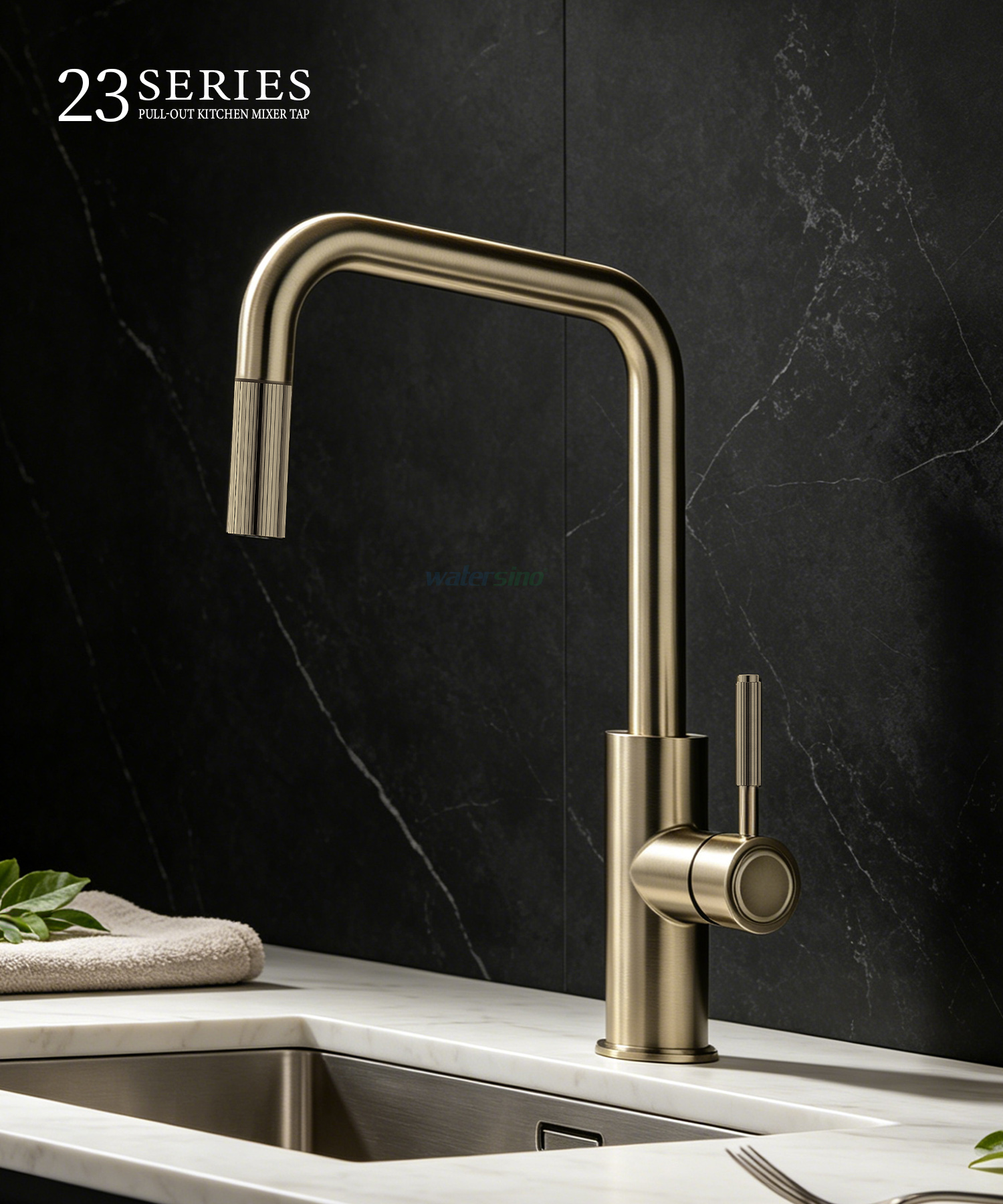
What Should B2B Buyers Compare Between Faucet Brands?
For B2B purchasing, comparing brands only at the logo level is often less useful than comparing individual products by specification.
A practical kitchen faucet brands premium vs budget comparison should consider:
1. Material Specification
Check the faucet body, waterway, handles, mounting components, and other critical parts. If brass is specified, verify the actual alloy and construction rather than relying on the word “brass” alone.
2. Component Quality
Compare the cartridge, hose, spray head, seals, valves, and other internal components. A low-cost faucet with reliable components may offer better value than a premium faucet with unnecessary features.
3. Finish Technology
Determine whether the product uses conventional finishing, PVD, or another surface treatment. For a PVD coating faucet, evaluate coating quality, testing, substrate, and production consistency.
4. Spray Function
For a kitchen faucet with sprayer, compare hose movement, docking, spray modes, switching mechanisms, and long-term reliability.
5. Certification and Compliance
The exact model should be checked against the requirements of the target market. Certification should be evaluated at the product level rather than assumed from the brand name.
6. Warranty and Parts
Long-term replacement-part availability can significantly affect the total cost of ownership.
7. OEM/ODM Capability
For distributors and project buyers, the ability to customize materials, finishes, packaging, branding, spray configurations, and other specifications can be more important than consumer brand recognition.
Does Certification Depend on Faucet Price?
Certification is an essential consideration for both premium and budget kitchen faucets.
In the United States, EPA WaterSense currently provides specifications for bathroom sink faucets, while kitchen faucets are not currently eligible for the WaterSense label.
Kitchen faucets sold in the U.S. are still subject to applicable federal flow-rate requirements. Under the Energy Policy Act, the maximum flow rate for kitchen faucets is 2.2 gallons per minute at 60 psi. State and local requirements may also apply, so buyers should confirm the requirements governing their specific project.
Certification should always be verified at the product level.
A premium kitchen faucet brand may have certified products in one product range and different specifications in another. Likewise, a budget manufacturer may offer products that meet the necessary market requirements.
For international B2B purchasing, buyers should verify certifications, test reports, flow rates, material requirements, and local plumbing standards before placing an order.
A higher price does not replace compliance documentation.
Which Faucet Works Best for Different Applications?
The best kitchen faucet brands depend heavily on the intended application.
Residential Kitchen Faucets
For a primary residential kitchen, buyers may prioritize:
Material quality
Smooth operation
Finish durability
Spray-head performance
Replacement parts
Warranty support
Premium products may be more attractive when the faucet will be used frequently for many years. Budget models can be appropriate for cost-sensitive residential developments.
Commercial and Hospitality Kitchens
Commercial and hospitality projects may place greater emphasis on certification, serviceability, installation requirements, product consistency, and supplier reliability.
For large projects, consistency across hundreds of units can be as important as the specification of one individual faucet.
A manufacturer capable of maintaining stable quality and supply may therefore provide more value than a consumer brand with stronger recognition but less flexible B2B support.
RV Kitchen Faucet: What Matters More Than Brand?
An rv kitchen faucet requires additional consideration because space, mounting dimensions, weight, connection type, and countertop thickness can differ from conventional residential installations.
Buyers should verify:
Mounting dimensions
Deck thickness requirements
Connection type
Faucet weight
Compatibility with the RV water system
An RV kitchen faucet does not necessarily need to come from a premium brand. A properly specified budget or mid-range product can be a better choice when compatibility, installation, and weight are the primary concerns.
How Manufacturing Capability Influences Faucet Quality
For B2B buyers, manufacturing capability can be just as important as brand reputation.
Premium and budget faucets may sometimes be manufactured in the same production facilities. What changes between different product programs can include:
Material specifications
Component selection
Finish requirements
Testing standards
Quality-control procedures
Packaging
Customization
Certification requirements
Therefore, the difference between a premium and budget faucet is not always the difference between a “good factory” and a “bad factory.”
In many cases, the difference results from the product specifications requested by different brand owners.
For OEM and ODM buyers, this creates an important opportunity. A manufacturer with flexible production capabilities may be able to develop a kitchen faucet that meets a specific target price while incorporating the materials, cartridge, finish, spray function, and certifications required by the buyer.
Sustainable Faucet Manufacturing: Premium vs Budget Approaches
Sustainability should also be part of a modern premium vs budget kitchen faucet comparison.
Sustainable faucet manufacturing can include:
Responsible material selection
Efficient production
Reduced manufacturing waste
Recyclable packaging
Durable product design
Repairable components
Water-efficiency considerations
Premium brands may invest more visibly in sustainability initiatives, but lower-cost manufacturers can also improve environmental performance through modern equipment, optimized production processes, and reduced material waste.
For B2B buyers, specific evidence is more useful than general sustainability claims. Depending on the project, buyers can request material information, environmental documentation, packaging details, manufacturing information, or third-party certifications.
A durable and repairable faucet can provide sustainability benefits regardless of whether the product is positioned as premium or budget.
How to Identify the Best Kitchen Faucet Brands
The best kitchen faucet brands are not necessarily the most expensive brands. They are the brands and suppliers whose products best match the buyer's actual requirements.
Before selecting a supplier or product, compare:
Material specification: Is the faucet body and waterway construction suitable for the application?
Component quality: What cartridge, hose, spray head, and internal components are used?
Finish technology: Is the selected finish appropriate for expected use and maintenance conditions?
Functionality: Are pull-down, pull-out, swivel, or multiple spray functions genuinely required?
Certification: Does the exact model meet the requirements of the target market?
Warranty and parts: Are replacement components available for future maintenance?
OEM/ODM capability: Can the supplier provide customized specifications, finishes, packaging, or branding?
Sustainability: Does the manufacturer provide evidence of efficient production, responsible materials, waste reduction, or durable product design?
Total cost: Does the premium option provide enough additional value to justify its higher purchase price?
This specification-based approach is more reliable than selecting a faucet simply because a brand is perceived as premium or budget.
Premium or Budget: Which Kitchen Faucet Is Right for You?
The best choice in a kitchen faucet brands premium vs budget comparison depends on the relationship between product specification, application, performance, and total cost.
Premium kitchen faucet brands may offer advantages in materials, components, PVD finishes, ergonomics, customization, quality control, and after-sales support.
Budget kitchen faucet brands can provide strong value when a project primarily requires reliable basic functionality, competitive pricing, easy replacement, and efficient procurement.
For B2B buyers, the most important question is not:
“Which brand is better?”
Instead, ask:
“Which brand and product specification best match my project requirements?”
A premium faucet is worth the additional investment when its higher specification provides meaningful benefits. A budget faucet is the better choice when it delivers the required performance without unnecessary features or cost.
Whether you are sourcing faucets for residential developments, hospitality projects, commercial applications, RV installations, or distribution, comparing documented specifications is the most practical way to identify the right product.
Ultimately, the strongest kitchen faucet brand is the one that delivers the right balance of material quality, functionality, finish performance, compliance, manufacturing capability, sustainability, service, and total cost for the intended application.
Table of Contents
- Kitchen Faucet Brands Premium vs Budget Comparison: How to Choose the Right Faucet
- What Separates Premium and Budget Kitchen Faucets?
- How Faucet Materials Affect Price and Performance
- Are Ceramic Cartridges Worth Paying More For?
- Kitchen Faucet with Sprayer: Comparing Function and Usability
- PVD Coating Faucet: Does a Premium Finish Justify the Cost?
- Comparing Features Across Different Price Points
- When Budget Kitchen Faucets Offer Better Value
- When Premium Faucets Are Worth the Investment
- What Should B2B Buyers Compare Between Faucet Brands?
- Does Certification Depend on Faucet Price?
- Which Faucet Works Best for Different Applications?
- How Manufacturing Capability Influences Faucet Quality
- Sustainable Faucet Manufacturing: Premium vs Budget Approaches
- How to Identify the Best Kitchen Faucet Brands
- Premium or Budget: Which Kitchen Faucet Is Right for You?