 EN

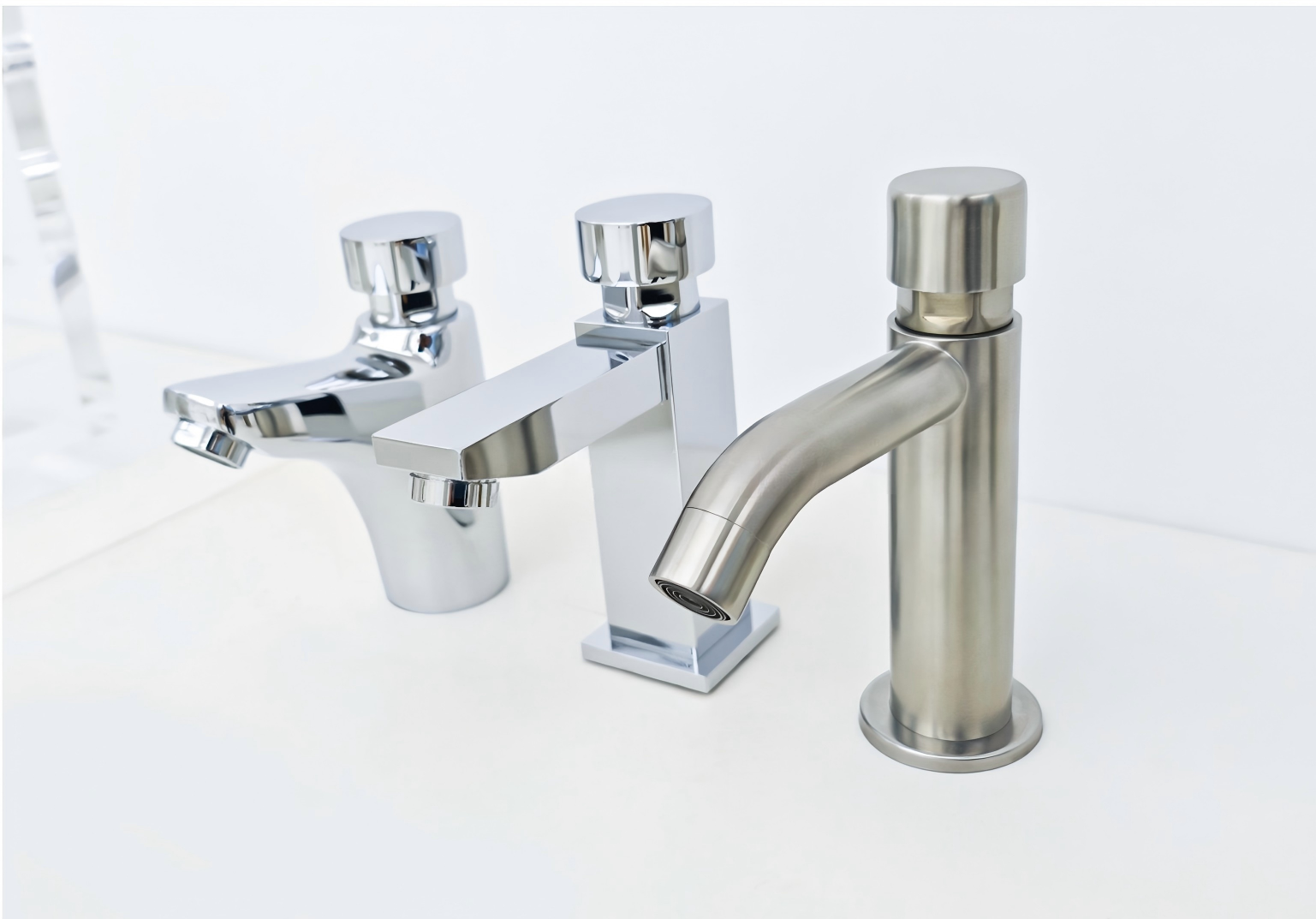
Chrome Faucet Polished vs Brushed Finish Comparison
A chrome faucet is one of the most visible and frequently touched fixtures in a kitchen or bathroom. When choosing between polished and brushed chrome, appearance is only part of the decision. The finish can affect how light is reflected, how fingerprints and water spots appear, how easily the faucet coordinates with surrounding materials, and how much cosmetic maintenance may be needed over time.
This chrome faucet polished vs brushed finish comparison explains the practical differences between the two finishes, including appearance, maintenance, durability considerations, residential and commercial applications, and specification requirements.
Both finishes can be produced using chrome-plating systems, but their final appearance is created through different surface-finishing processes. Polished chrome has a smooth, highly reflective surface, while brushed chrome has a directional texture that creates a softer and more diffuse appearance.
For homeowners, designers, contractors, architects, distributors, and commercial buyers, the better choice depends on the environment in which the faucet will be installed and the appearance and maintenance expectations of the project.
Polished vs Brushed Chrome: What Is the Difference?
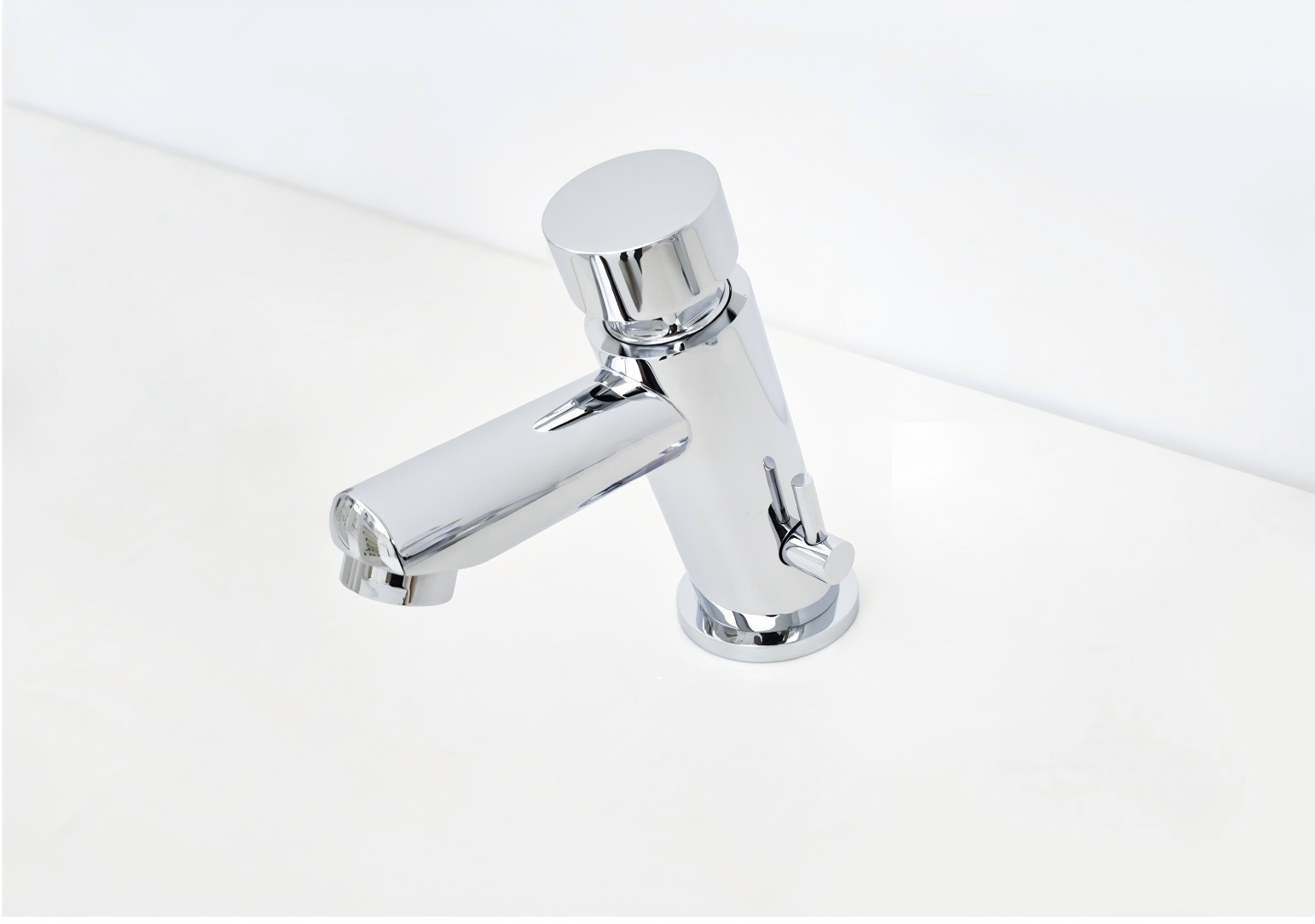
The primary difference between polished and brushed chrome is how the surface interacts with light.
Polished chrome has a smooth, mirror-like appearance that reflects light directly. It creates bright highlights and gives the faucet a clean, classic appearance. This finish can work particularly well with glossy tile, glass, polished hardware, white porcelain, and other reflective materials.
Brushed chrome has a fine directional texture that scatters light more softly. Instead of producing strong reflections, it creates a satin-like appearance that is generally more understated. This makes it suitable for contemporary interiors featuring brushed metals, matte surfaces, and neutral finishes.
Neither finish is automatically better. In a chrome faucet polished vs brushed finish comparison, the more important question is which finish better matches the room, usage conditions, cleaning routine, and overall design concept.
How Polished Chrome Looks in Kitchens and Bathrooms
Polished chrome remains popular because of its bright and reflective appearance.
In kitchens, a polished chrome faucet can coordinate with stainless steel appliances, polished handles, glass, and other reflective hardware. In bathrooms, it can complement mirrors, white ceramic fixtures, glossy tile, and traditional interiors.
Its main advantage is visual impact. Under natural or artificial lighting, polished chrome creates strong highlights and can make the faucet an important decorative element.
The trade-off is that its reflective surface can also make fingerprints, dried water droplets, and mineral deposits more noticeable. In a busy kitchen or hard-water area, users may therefore need to wipe the surface more frequently to maintain its glossy appearance.
This is primarily a cosmetic maintenance consideration and does not necessarily indicate lower product durability.
Why Choose Brushed Chrome?
Brushed chrome offers a softer alternative to the highly reflective appearance of polished chrome.
Its directional texture breaks up reflections, which can make fingerprints and minor water marks less visually prominent during everyday use. This can be useful in family kitchens, rental properties, hospitality environments, and other areas where faucets are frequently touched.
Brushed chrome also works naturally with contemporary interiors that incorporate brushed stainless steel, satin hardware, matte surfaces, and understated metallic details.
It is not maintenance-free, however. Hard-water deposits and other contaminants can still accumulate on the surface. Regular cleaning should follow the manufacturer's recommendations, particularly where the faucet is exposed to mineral deposits or commercial cleaning products.
Polished vs Brushed Chrome Maintenance
The main maintenance difference between the two finishes is how easily surface marks become visible.
Polished chrome tends to show fingerprints and dried water spots more clearly because the smooth surface reflects light directly. Users who prefer a consistently glossy appearance may therefore clean it more frequently.
Brushed chrome generally disguises minor handling marks more effectively because its surface texture diffuses reflected light. As a result, the faucet can maintain a cleaner visual appearance between routine cleaning cycles.
For both finishes, abrasive cleaners, harsh chemicals, and unsuitable cleaning tools may damage the surface. Manufacturer cleaning instructions should always be followed.
Hard Water and Water Spots
Hard water can affect both polished and brushed chrome.
On polished chrome, mineral deposits may be particularly noticeable because they interrupt the smooth reflective surface. Brushed chrome can visually disguise small deposits more effectively, but accumulated minerals can still affect the appearance.
Therefore, neither finish eliminates hard-water maintenance. The difference is primarily how visible the deposits are between cleaning cycles.
Does Chrome Finish Affect Faucet Durability?
The finish should not be confused with the overall durability of the faucet.
Long-term performance depends on the complete product, including the base material, plating or coating system, surface preparation, cartridge, valve, seals, connectors, manufacturing quality, installation, and maintenance.
A well-manufactured polished chrome faucet and a well-manufactured brushed chrome faucet can provide comparable service performance when they use equivalent materials and production standards.
For buyers, this means finish should be evaluated as one part of the overall product specification rather than used as a standalone indicator of quality.
Chrome Finish, Faucet Function, and Commercial Applications
The surface finish is independent of the faucet's operating mechanism. A commercial project can therefore select polished or brushed chrome while using a mechanism suited to its application.
For example, a Time Delay Faucet Tap can be specified where automatic shutoff is desirable, while a Push Button Faucet can be selected where push-button operation is appropriate. These functional configurations can be combined with different chrome finishes according to the project's design and maintenance requirements.
This distinction is useful when reviewing architectural specifications, because finish, operating mechanism, flow rate, accessibility, and compliance can be specified separately.
ADA Considerations for Chrome Faucets
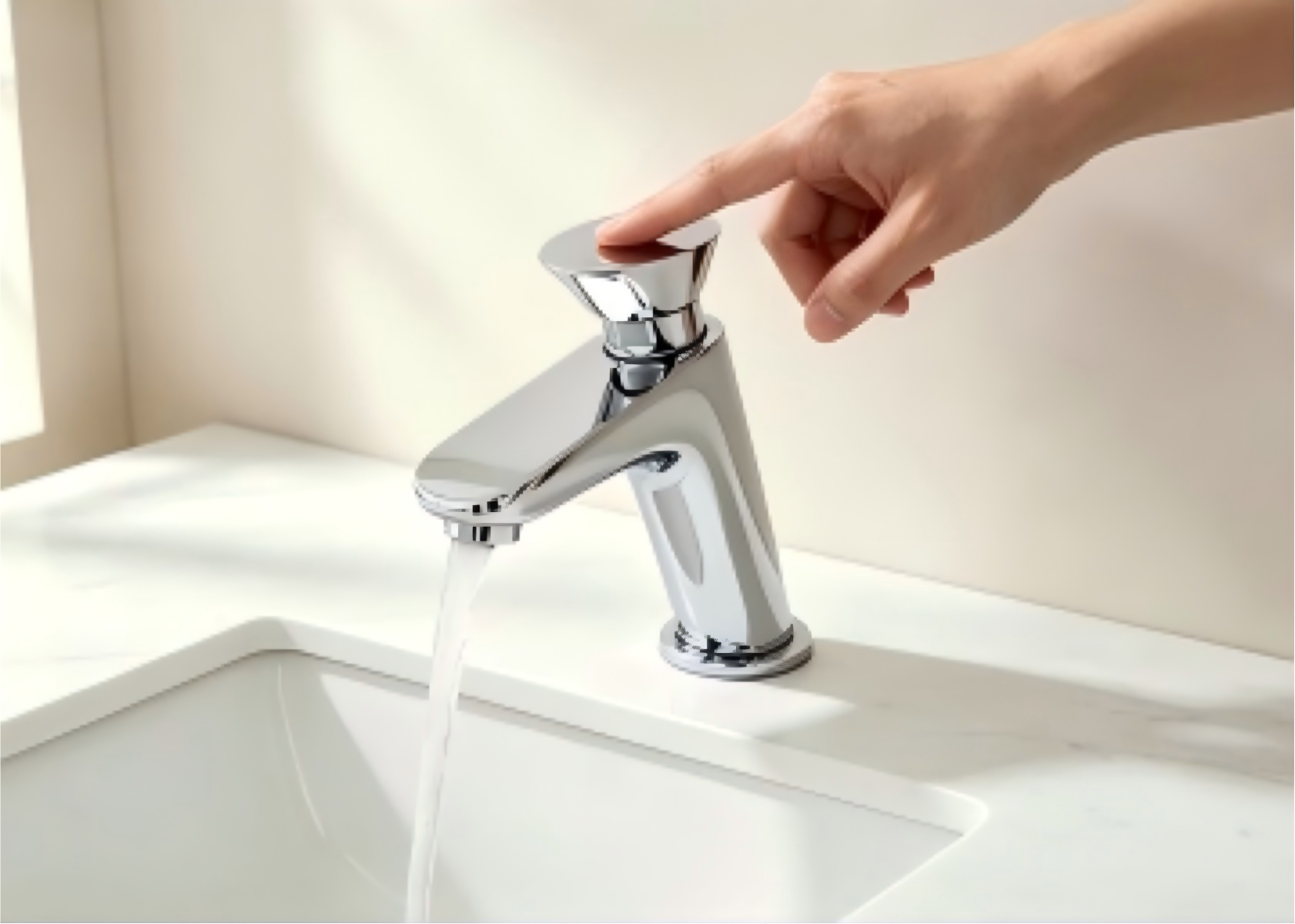
ADA requirements generally concern the accessibility and operation of a plumbing fixture rather than whether its surface is polished or brushed.
Depending on the application, lever-operated, push-button, metering, or touchless faucets may be considered when the complete fixture and installation meet the applicable accessibility requirements. A metering faucet may also be used where the water flow is automatically controlled for a defined period.
Therefore, selecting polished or brushed chrome should not be treated as an ADA decision. For commercial projects in the United States, the complete faucet, controls, clearances, mounting arrangement, and installation should be evaluated against the applicable accessibility requirements.
Chrome Finish and Architectural Specifications
For hospitality, healthcare, education, commercial, and institutional projects, finish selection is often included within detailed architectural specifications.
Specifications may identify the required faucet finish together with base material, cartridge, flow rate, operating mechanism, accessibility characteristics, corrosion resistance, certification, and installation requirements.
Polished chrome may be specified when a project requires a bright, reflective appearance, while brushed chrome may be selected when a softer metallic appearance and less visible everyday marking are preferred.
This makes finish consistency particularly important for large projects. When multiple faucets are installed in the same building, differences in polishing, brushing, plating, or production batches may become visually noticeable.
Bespoke Finishes Beyond Standard Chrome
Standard polished and brushed chrome cover many applications, but some projects require a more specific appearance.
Bespoke finishes may include customized polishing levels, brushing patterns, satin effects, specialty colors, or combinations of surface treatments, depending on the manufacturer's capabilities.
Custom finishes can be useful for hospitality brands, architectural projects, private-label products, and interior designs requiring a distinctive visual identity.
For large orders, buyers should also consider minimum order quantities, lead times, testing requirements, pricing, and finish consistency across production batches.
Polished vs Brushed Chrome for Residential Projects
For residential kitchens and bathrooms, the choice is often determined by appearance, surrounding materials, and cleaning preferences.
Polished chrome is a strong option for homeowners seeking a bright, classic metallic appearance. It works particularly well with glossy surfaces, traditional interiors, mirrors, white ceramic fixtures, and polished hardware.
Brushed chrome may be preferable for contemporary interiors or households where reducing the visual prominence of fingerprints and minor water marks is important.
The best choice therefore depends not only on the faucet itself but also on how the surrounding room is designed and how frequently the faucet is used and cleaned.
Polished vs Brushed Chrome for Commercial Projects
Commercial and hospitality environments can place greater emphasis on maintenance and visual consistency because faucets may be used repeatedly by many people throughout the day.
Brushed chrome can be attractive for high-use areas because its textured surface can make minor fingerprints and water marks less noticeable. Polished chrome can still be an excellent choice for premium hospitality and commercial interiors where a bright, reflective appearance is part of the design concept.
The appropriate finish depends on the balance between appearance, cleaning routines, traffic level, and architectural requirements.
Chinese Faucet Manufacturers vs International Brands
When comparing Chinese faucet manufacturers vs international brands, the finish itself should not be used as a measure of manufacturing quality.
B2B buyers should evaluate measurable factors such as base material, chrome-plating or coating processes, surface preparation, cartridge quality, quality-control procedures, certifications, warranty support, OEM/ODM capability, production consistency, lead time, and replacement-part availability.
A capable manufacturer should be able to provide consistent polished and brushed chrome finishes across production runs and support the documentation required for the target market.
For distributors, contractors, and private-label buyers, samples, technical documentation, factory capabilities, testing procedures, and production controls are generally more useful evaluation criteria than country of origin alone.
Certification and Product Requirements
Certification requirements depend on the faucet type, destination market, intended application, and applicable regulations.
For products used in drinking-water systems or regulated commercial installations, buyers may need to review applicable plumbing standards, material requirements, water-efficiency rules, accessibility requirements, and other market-specific regulations.
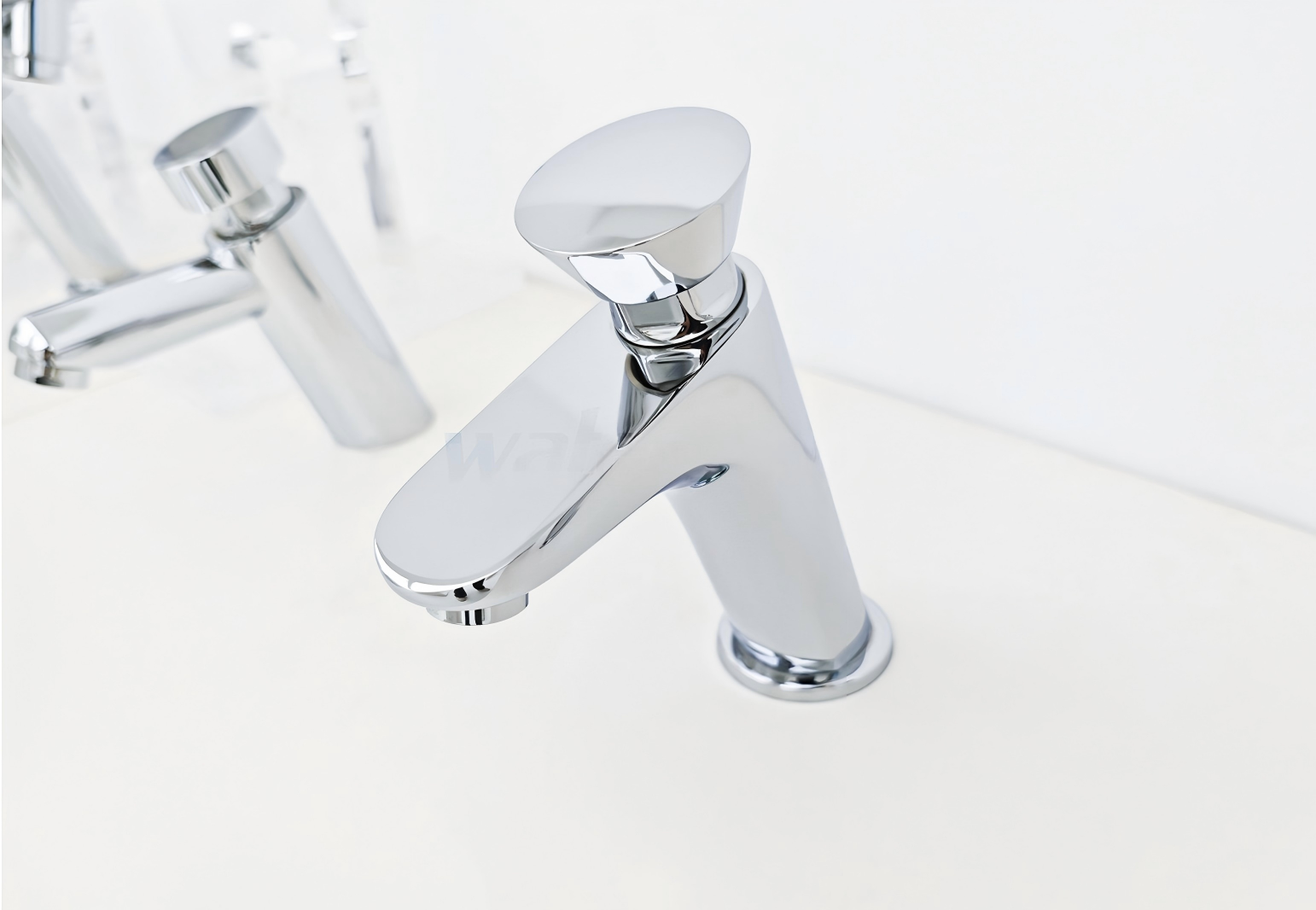
The chrome finish itself does not automatically determine compliance. Polished and brushed versions of the same faucet may share similar compliance characteristics when their construction and components are equivalent, but the exact model and configuration should always be verified.
Polished vs Brushed Chrome: Which Finish Is Better?
In this chrome faucet polished vs brushed finish comparison, there is no universal winner.
| Consideration | Polished Chrome | Brushed Chrome |
|---|---|---|
| Appearance | Bright and highly reflective | Soft and understated |
| Light reflection | Strong | Diffuse |
| Fingerprint visibility | More noticeable | Generally less noticeable |
| Water-spot visibility | More noticeable | Generally less noticeable |
| Design style | Classic, traditional, glossy | Contemporary, understated |
| Cleaning appearance | May require more frequent wiping | Marks can remain less visible |
| Hard-water deposits | Easier to see | Less visually prominent |
| Commercial use | Suitable with regular cleaning | Attractive for high-use areas |
| Customization | Available depending on manufacturer | Available depending on manufacturer |
Polished chrome is generally the better visual choice when brightness and reflectivity are priorities. Brushed chrome can be more practical when a softer appearance and lower visibility of everyday marks are preferred.
How to Choose the Right Chrome Faucet Finish
Choose polished chrome when:
You want a bright, reflective, classic appearance.
The room contains glossy tile, glass, mirrors, or polished hardware.
Visual impact is an important part of the design.
Regular surface wiping is acceptable.
Choose brushed chrome when:
You prefer a softer, contemporary metallic appearance.
The faucet will be touched frequently.
Reducing the visibility of fingerprints and minor water spots is important.
The surrounding design uses brushed or matte metal finishes.
For commercial and architectural projects, the decision should additionally consider operating mechanisms, accessibility, cleaning procedures, architectural specifications, certification, production consistency, and supplier support.
Conclusion
The key difference in a chrome faucet polished vs brushed finish comparison is not simply which surface looks better. It is how each finish behaves under lighting, everyday handling, cleaning, and the surrounding design environment.
Polished chrome provides a bright, highly reflective appearance and works particularly well with traditional interiors, glossy surfaces, glass, white ceramics, and polished hardware. Its smooth surface, however, makes fingerprints and water spots easier to see.
Brushed chrome produces a softer, more diffuse appearance and can make minor handling marks less visually prominent. It is often a practical choice for contemporary interiors, busy households, rental properties, hospitality spaces, and other high-use environments.
Neither finish automatically determines overall faucet durability. Base material, plating quality, cartridge and valve construction, manufacturing controls, installation, maintenance, and product compliance all contribute to long-term performance.
Functional configurations such as a Time Delay Faucet Tap or Push Button Faucet can be selected independently from the finish, while ADA and other regulatory considerations should be evaluated according to the complete fixture and installation.
For B2B buyers comparing Chinese faucet manufacturers vs international suppliers, the better approach is to evaluate technical specifications, production consistency, testing, certification, customization capabilities, lead times, and after-sales support.
Ultimately, the best chrome finish is the one that provides the right balance of appearance, maintenance visibility, application requirements, and long-term value.
Table of Contents
- Chrome Faucet Polished vs Brushed Finish Comparison
- Polished vs Brushed Chrome: What Is the Difference?
- How Polished Chrome Looks in Kitchens and Bathrooms
- Why Choose Brushed Chrome?
- Polished vs Brushed Chrome Maintenance
- Does Chrome Finish Affect Faucet Durability?
- Chrome Finish, Faucet Function, and Commercial Applications
- ADA Considerations for Chrome Faucets
- Chrome Finish and Architectural Specifications
- Bespoke Finishes Beyond Standard Chrome
- Polished vs Brushed Chrome for Residential Projects
- Polished vs Brushed Chrome for Commercial Projects
- Chinese Faucet Manufacturers vs International Brands
- Certification and Product Requirements
- Polished vs Brushed Chrome: Which Finish Is Better?
- How to Choose the Right Chrome Faucet Finish
- Conclusion